


How Orthotics Can Support Spinal Alignment
Key Highlights
- Your spine sits on top of a chain of joints that starts at your feet.
- Foot orthoses can change how forces travel up through the ankles, knees, hips, and pelvis.
- Heel lifts can help when a leg length difference tilts the pelvis and affects the spine.
- Spinal braces support, limit motion, and, in growing teens, may help slow curve progression.
- Different devices serve different goals, and the right choice depends on a professional evaluation.
- Orthotics support alignment but do not replace medical care, exercise, or follow-up.
- Comfort, wear schedule, and regular fit checks decide how well a device works over time.
Many people assume spinal problems begin and end in the spine itself. In reality, your spine sits on top of a chain of joints and muscles that starts at your feet. When one link in that chain is out of balance, the spine often compensates. Over months or years, that compensation can show up as stiffness, uneven posture, fatigue, or pain.
Orthotic devices are designed to step into that chain and make it work better. Depending on the person, that might mean a custom foot orthosis that improves how the foot meets the ground, a lift that levels the pelvis, or a spinal brace that provides external support. This guide explains how orthotics can support spinal alignment, which devices are used for which purposes, what they can and cannot do, and what to expect when you are evaluated for one.
Understanding Spinal Alignment and the Chain Beneath It
A healthy spine is not perfectly straight when viewed from the side. It has gentle natural curves in the neck, upper back, and lower back that help absorb shock and distribute load. Viewed from behind, it should look balanced, with shoulders and hips sitting roughly level.
Alignment depends on more than the spine itself:
- The feet provide the base. How they land, roll, and push off sets the pattern for everything above.
- The ankles, knees, and hips pass those forces upward and either absorb or amplify them.
- The pelvis acts as the foundation of the spine. If it tilts or rotates, the lower back has to adjust.
- The muscles of the trunk and hips hold the structure together, and they can tire or tighten when they are asked to compensate for a poor foundation.
This is often called the kinetic chain, and it explains why a problem at the foot, such as a collapsing arch or an uneven stride, can sometimes be linked to discomfort much higher up. It also explains why an orthotic placed on the ground can influence how the body stacks above it.
How Orthotics Support Spinal Alignment
Orthotic devices support alignment in a few distinct ways. Understanding the mechanism helps explain why one person needs a foot device while another needs a brace.
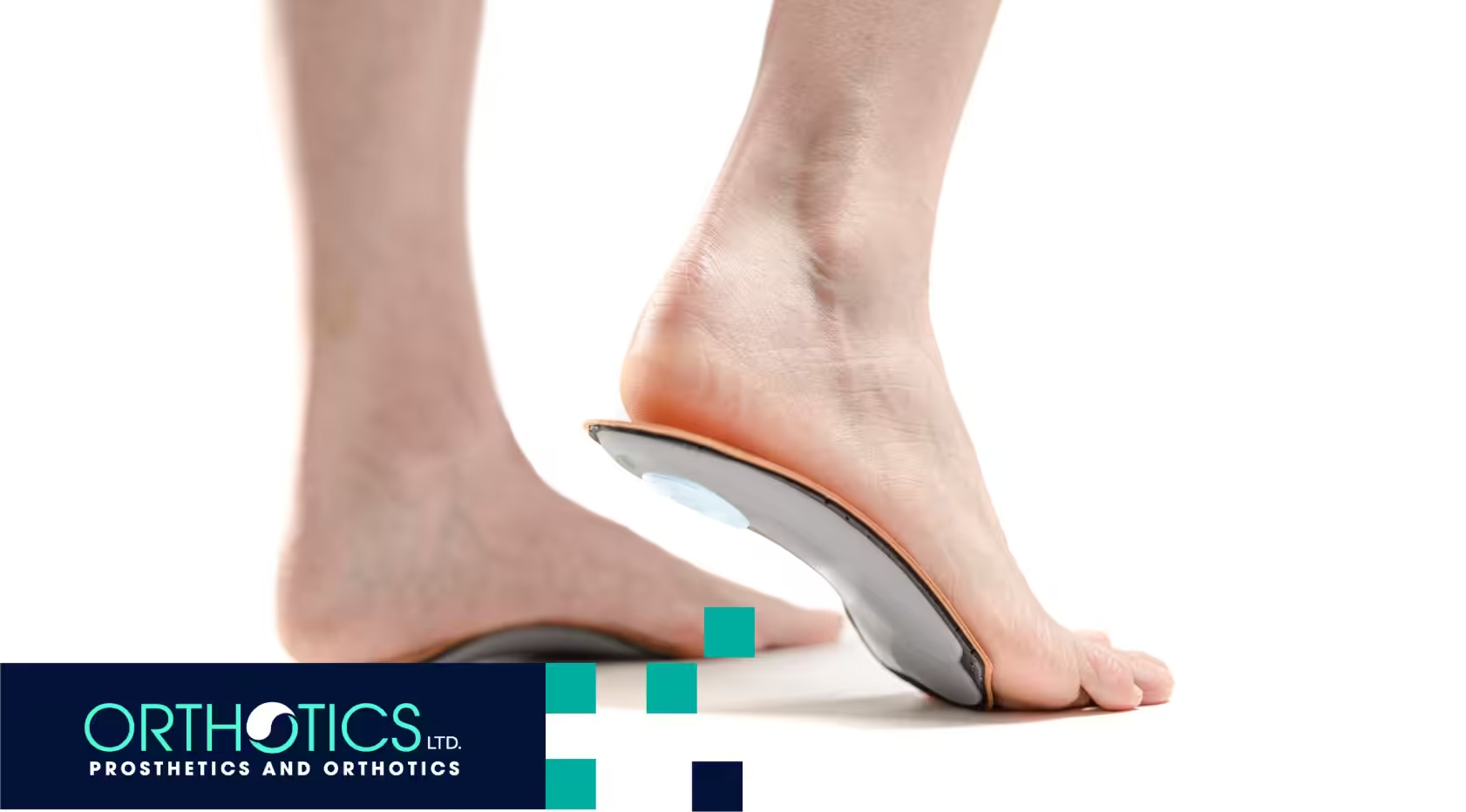
- Improving the base of support. A custom foot orthosis is shaped to the contours of your foot. By supporting the arch and guiding how the heel and forefoot meet the ground, it can reduce excessive inward or outward rolling. That changes the rotation passing up through the leg and can influence how the pelvis moves during walking.
- Leveling the pelvis. When one leg is functionally or structurally shorter than the other, the pelvis can tilt to one side. The spine may then curve to compensate. A lift built into a shoe or orthosis can reduce that difference so the pelvis sits more level.
- Providing external stability. Spinal orthoses, often called braces, wrap around the trunk to support the spine, limit certain motions, and reduce the load on injured or vulnerable structures.
- Guiding growth. In children and adolescents who are still growing, a carefully fitted spinal brace is used with the goal of helping prevent certain curves from progressing.
It is worth being honest about the evidence. Research on foot orthoses and back pain is still developing, and responses vary a great deal from person to person. That is exactly why an individual evaluation matters more than any general promise about a product.
Types of Orthotic Devices Used to Support the Spine
| Device | What It Targets | Who It May Help |
|---|---|---|
| Custom foot orthoses | Arch support, heel and foot positioning, force transfer up the leg | People with flat feet, overpronation, uneven wear, or alignment strain traced to the feet |
| Heel or shoe lifts | Leg length difference and pelvic tilt | People whose pelvis sits uneven because of a measured leg length discrepancy |
| Lumbar-sacral orthoses (LSOs) | Low back support and motion control | People recovering from injury or surgery, or those with instability, as directed by their physician |
| Thoracolumbar spinal orthoses (TLSOs) | Support and positioning of the mid and lower spine | Growing adolescents with certain curve patterns, or patients needing broader spinal support |
| Sacroiliac belts | Stability around the pelvis and lower back | People with pelvic or sacroiliac joint discomfort |
Custom Foot Orthoses
Prefabricated inserts can help some people, but custom orthoses are made from a scan or cast of your own foot and tuned to your body and activity level. For someone whose arches collapse under load, a well-made orthosis can improve how the foot absorbs impact and how the leg lines up above it.
Lifts for Leg Length Differences
Even a small difference in leg length can matter over thousands of steps a day. Lifts are carefully measured and adjusted, often in stages, because the body needs time to adapt to a new balance.
Spinal Braces
Braces vary widely. Some are soft and flexible for comfort and gentle support. Others are rigid, custom-molded, and prescribed to hold a specific position. In adolescents with scoliosis, a spinal orthosis is generally used to help reduce the chance that a curve will worsen as the child grows. It is not a cure, and it does not typically straighten an established curve, but consistent wear as directed can be an important part of a treatment plan.
Signs Your Alignment May Benefit From an Orthotic Evaluation
You do not need a diagnosis to ask for an evaluation. Common reasons people come in include:
- Shoes that wear down unevenly or on one side much faster than the other
- One shoulder or hip that looks higher than the other in photos or the mirror
- Low back, hip, or knee discomfort that builds during standing or walking
- Flat or highly arched feet, or arches that visibly collapse when you stand
- A noticeable lean or sway when you stand relaxed
- A child or teen with a spinal curve found at a school or pediatric screening
- A recommendation from your physician or physical therapist to explore bracing or lifts
None of these means something is seriously wrong. They simply mean it is worth having a trained professional look at how your body is moving and supporting itself.
What Orthotics Can and Cannot Do
Setting honest expectations helps people get better results.
What orthotics can do:
- Improve how load is distributed through the feet, legs, and pelvis
- Reduce strain on structures that are compensating for a mechanical problem
- Provide external support during recovery or growth
- Make standing, walking, and daily activity more comfortable for many people
What orthotics cannot do:
- Replace medical evaluation of new or worsening spinal symptoms
- Fix every cause of back pain, since pain can have many sources
- Work without proper fit, consistent use, and follow-up
- Substitute for strengthening, stretching, and other care your clinician recommends
The best outcomes tend to happen when an orthotic is part of a plan, not the entire plan.
What We See in Practice
Examples make the concept easier to picture. The situations below reflect patterns from our sessions, with personal details removed.
The desk worker with end-of-day back ache.
We have seen adults who sit most of the day and then stand for errands or commutes describe a dull low back ache that builds toward evening. In our sessions, a common finding is arches that flatten under load and a stride that rolls inward more on one side. Custom foot orthoses, combined with guidance from their physician or therapist, often change how they feel through the day because the foot is no longer asking the pelvis and lower back to compensate.
The adult with a hidden leg length difference.
Some people live for years with a pelvis that sits slightly tilted and never realize why one hip always feels tight. When a measured difference is found, a properly sized lift can help level things out. We introduce lifts gradually because the body needs time to adapt, and we recheck the balance afterward.
The teenager with a brace has a schedule to keep.
Teens in a spinal brace face a real challenge: wearing it consistently while managing school, sports, and social life. In our sessions, the patients who do best are the ones whose braces fit comfortably, who understand why the schedule matters, and who come back for adjustments as they grow. A brace that rubs or no longer fits is a brace that stays in the closet, so fit and follow-up are as important as the device itself.
What to Expect During an Evaluation
A thorough orthotic evaluation is more than taking a foot scan. A typical visit includes:
- A history review. Your clinician asks about your symptoms, past injuries, surgeries, activity level, work demands, and any diagnoses or recommendations from your physician.
- A standing and walking assessment. Posture, pelvic level, shoulder height, foot position, and gait all offer clues about how your body is carrying itself.
- Measurements and scans. Depending on the device, this may include leg length measurement, foot scanning or casting, or trunk measurements for a brace.
- A device recommendation. You should hear what is recommended, why it fits your situation, and what outcomes are realistic.
- A fitting and adjustment period. New devices often need fine-tuning. Wear schedules are usually increased gradually, and follow-up visits help catch any rubbing, discomfort, or fit concerns early.
Because bodies change, especially in growing children, follow-up checks are part of keeping an orthotic working as intended.
Support Your Spine From the Ground Up
Spinal alignment is not just about the back. It reflects how your feet, legs, pelvis, and trunk work together every time you stand, walk, or sit. The right orthotic device, chosen after a careful evaluation and fitted with attention to detail, can help that system share the load more evenly, whether the goal is comfort, balance, or support during growth and recovery.
At Orthotics Ltd., our clinicians take the time to understand how your whole body moves before recommending a device, then follow through with fitting, adjustments, and ongoing care. We proudly serve patients throughout New York. If back discomfort, uneven posture, or a spinal curve is on your mind, contact us today to schedule your evaluation and take the first step toward moving with more support and confidence.
Frequently Asked Questions
1. Can foot orthotics really affect my back?
They can influence how forces travel from the ground up through the leg and pelvis, and for some people that reduces strain on the lower back. Results vary, and not all back pain is related to the feet, which is why a proper evaluation matters.
2. Will a spinal brace fix scoliosis?
A brace is generally used to help reduce the chance that a curve will progress in a growing adolescent. It is not a cure and does not usually straighten an established curve. Your physician and orthotist can explain the goals for your specific situation.
3. How long does it take to adjust to a new orthotic?
Many people notice the device feels different at first. Wear time is usually increased gradually over the first days or weeks, and your clinician will tell you what to expect. If you notice pain, rubbing, or skin changes, contact your provider rather than pushing through.
4. Do I need a prescription for custom orthotics or a spinal brace?
Requirements depend on the type of device and on insurance rules. Spinal braces are commonly prescribed by a physician, while foot orthoses may have different requirements. The office can help you understand what applies to your situation.
5. How often should my orthotic be checked?
It depends on your device and your body. Growing children and anyone whose weight, activity, or condition is changing may need more frequent checks. Your clinician will recommend a schedule.
Sources:
- https://insightcla.com/blog/spinal-curves/
- https://wexnermedical.osu.edu/brain-spine-neuro/spine-diseases-conditions/spinal-curvatures
- https://www.nyspine.com/blog/what-are-the-four-normal-curves-of-the-spine/
- https://www.ncbi.nlm.nih.gov/books/NBK279468/
