


Can You Drive With a Prosthetic Leg or Arm?
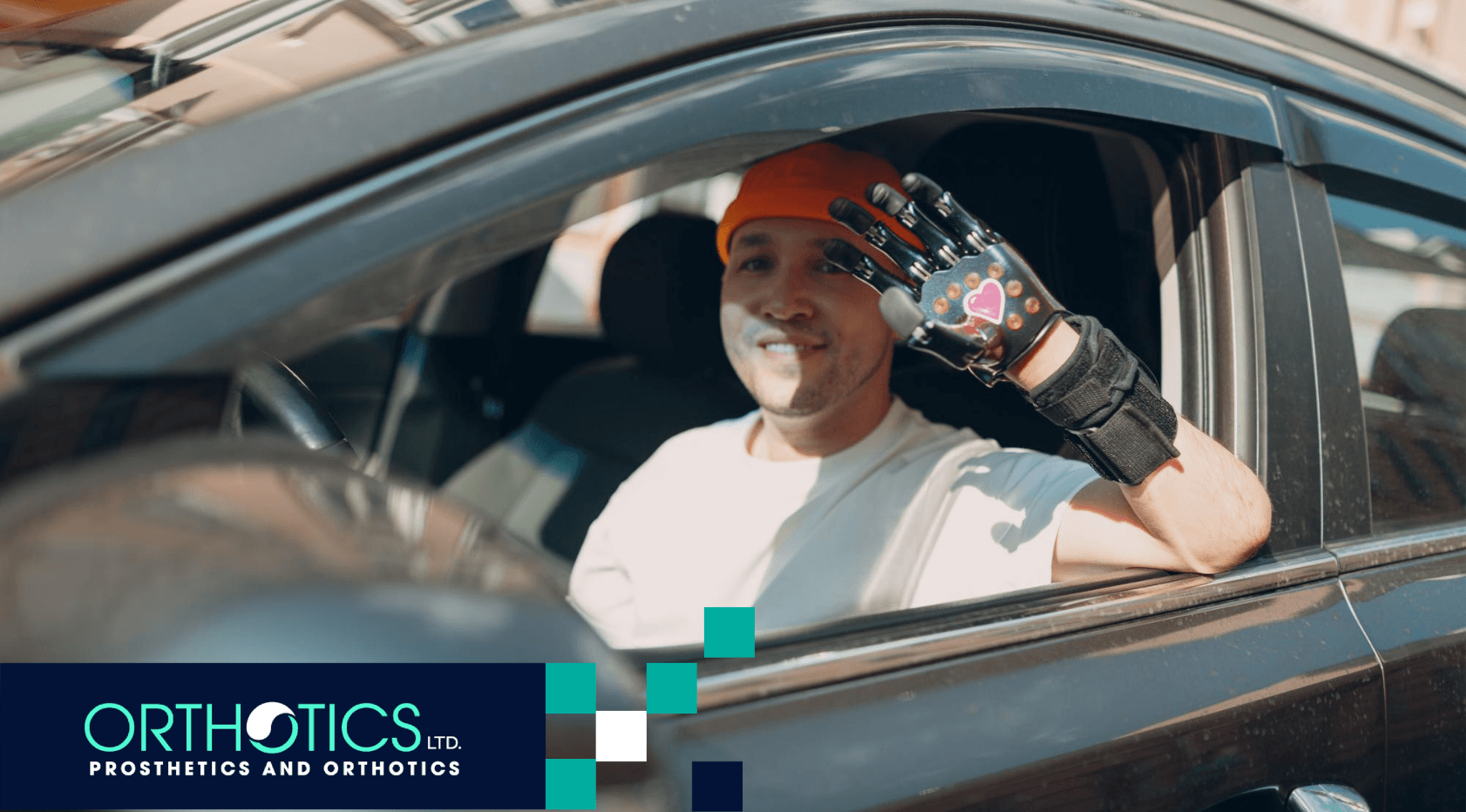
Key Highlights
- Most people with limb loss return to driving, often with minimal or no vehicle modifications.
- Which limb is affected matters enormously: a left leg amputation in an automatic vehicle frequently changes nothing about how you drive.
- A driver rehabilitation evaluation, not a guess or an online purchase, should determine what equipment you need.
- New York can add a prosthetic device restriction to your license and may require a road test in your adapted vehicle.
- Health insurance generally does not pay for vehicle modifications, but ACCES-VR and VA programs often do.
- A poorly fitting or poorly configured prosthesis affects driving safety, which makes device setup part of the conversation.
Getting Your Life Back Usually Means Getting Your Keys Back
Ask people recovering from an amputation what they miss, and driving comes up constantly. Not as a hobby, but as the thing that makes everything else possible. Driving is how you get to work, to therapy appointments, to the grocery store, to your daughter’s house on a Sunday. Losing it means depending on other people for almost everything, which wears on a person far more than the physical recovery does.
The good news is straightforward: most people with limb loss drive again. Many drive the same car they drove before, with no modifications at all. Others need equipment, and that equipment is well established, widely available, and far less dramatic than people imagine before they see it.
What determines your path is not willpower. It is a combination of which limb is involved, how your prosthesis functions, and what an evaluation shows about your reaction time and control. A properly fitted, well-configured prosthesis is a genuine part of that picture, and it is worth getting right before you start the licensing process.
The Short Answer, and What It Actually Depends On
Yes, you can drive with a prosthetic limb. There is no law anywhere in the United States that bars a person with an amputation from holding a driver’s license.
What varies is how you get there. The practical factors are:
- Which limb. Left leg, right leg, left arm, right arm, or multiple limbs each produce a different answer.
- Level of amputation. Below-knee and above-knee create different challenges. The same is true for below-elbow versus above-elbow.
- Your prosthesis. Component type, socket fit, and suspension all affect control and feedback.
- Your vehicle. Automatic transmission versus manual changes the calculation substantially.
- Your overall function. Reaction time, strength, vision, balance, and cognition matter alongside the limb itself.
The honest answer to “will I need hand controls?” is that nobody can tell you from a description. That is what an evaluation is for.
Can You Drive With a Prosthetic Leg?
Left leg
In an automatic transmission vehicle, a left leg prosthesis often changes very little. Both pedals are operated with the right foot, so the left leg is not performing a driving task at all. Many people in this situation return to driving with no modifications and no equipment restriction.
Manual transmission is different. Operating a clutch requires graded, sensitive control and quick release, which is difficult with most prosthetic feet. Some people manage it, particularly with certain hydraulic ankle components, but switching to automatic is the more common and more practical outcome.
Right leg
This is where most questions arise, because the right foot normally runs both pedals. Two paths exist.
The first is driving with the prosthesis. Some people can operate the accelerator and brake using a prosthetic foot, moving between pedals accurately and feeling resistance through the socket. Below-knee amputees with good proprioception and a responsive foot component are the most likely candidates. This has to be demonstrated in evaluation rather than assumed, because the concern is not whether you can press the pedal. It is whether you can move from accelerator to brake quickly and precisely in an emergency.
The second path is a left-foot accelerator, a second gas pedal installed to the left of the brake, with a guard that blocks the original pedal. The sound left leg then does all the work. This is a common, well-proven solution, though it requires retraining, because decades of muscle memory now have to be relearned.
Hand controls are the third option, operating both acceleration and braking through a lever by the steering column. These are more often associated with bilateral limb loss or situations where neither leg provides reliable control.
Above knee versus below knee
Transfemoral amputees generally face more complexity, since there is no ankle or knee feedback from the residual limb and the prosthetic knee introduces its own behavior. Microprocessor knees handle seated positioning and transitions differently from mechanical knees, which can affect comfort and control in a car. None of this rules out driving. It simply raises the value of a formal evaluation.
Bilateral limb loss
Driving after bilateral lower limb amputation is well established, typically with hand controls and often with additional vehicle modifications for transfers and seating. The evaluation and equipment path is longer, but it is a well-traveled one.
Can You Drive With a Prosthetic Arm?
Yes, and here the central safety point is often misunderstood.
Steering with a prosthetic terminal device gripping the wheel rim is generally not recommended as the primary method. A hook or hand that is holding the rim can also become stuck on it, and release may not be fast enough when it matters. Drivers also lose the tactile feedback that tells you what the front tires are doing.
The standard solution is a steering device mounted on the wheel: a spinner knob, a tri pin, a palm grip, or an amputee ring, matched to what your prosthesis can reliably engage and disengage. The sound arm usually does the steering, and the prosthesis assists or stabilizes.
The second consideration is everything else the hands do. Turn signals, wipers, headlights, gear selector, and ignition are frequently clustered on one side of the column. A driver with a right arm prosthesis may need a turn signal crossover extension, so the left hand can reach controls designed for the right. These are small, inexpensive modifications that make a large practical difference.
Both body-powered and myoelectric prostheses are used by drivers. Each has trade-offs behind the wheel involving grip speed, reliability, and fatigue over longer drives, and the right choice depends on the individual.
Common Setups at a Glance
| Situation | Typical approach | Usually requires |
|---|---|---|
| Left leg, automatic vehicle | Drive as before | Often no modification |
| Left leg, manual vehicle | Switch to automatic, or evaluate clutch control | Evaluation |
| Right leg, good prosthetic control | Drive with prosthesis | Evaluation, possible road test |
| Right leg, limited pedal control | Left foot accelerator with pedal guard | Evaluation, training, license restriction |
| Bilateral lower limb | Hand controls | Evaluation, training, license restriction |
| One upper limb | Steering knob or tri-pin, signal crossover | Evaluation, possible restriction |
This table is a starting point for conversation, not a prescription. Individual circumstances vary considerably.
What a Driving Evaluation Involves
The professional who decides your equipment is a driver rehabilitation specialist, often an occupational therapist, and frequently credentialed as a Certified Driver Rehabilitation Specialist through the Association for Driver Rehabilitation Specialists. New York has established programs, including hospital-based adaptive driving services with specially equipped evaluation vehicles.
The evaluation has two parts.
The clinical portion measures reaction time, strength, range of motion, vision, and cognition, along with how you function with your prosthesis on.
The on-road portion puts you behind the wheel of a vehicle fitted with the equipment the specialist thinks may suit you, in real traffic. This is where recommendations get tested rather than theorized.
The output is a written report recommending specific equipment and any training needed. That report is what the DMV, vehicle modification vendors, and funding programs all work from.
One thing worth stating plainly: buying hand controls online and installing them yourself, then showing up for a road test, creates problems. It bypasses the professional recommendation that funding sources and licensing both rely on, and it risks equipment that does not suit your actual function.
What New York Requires
New York handles medical conditions affecting driving through its license restriction system. The restriction code D, printed as “Prosthetic Device,” indicates that the driver is required to use an external or implanted device replacing or supplementing a missing body part.
The process generally works like this. When a medical condition affecting driving is identified, you meet with a DMV examiner from the Testing and Investigation Unit. That examiner determines what is required, whether restrictions should be added to your license, and whether a road test is needed to retain the license. When adaptive equipment is involved, that road test is normally taken in a vehicle fitted with the equipment you will actually use.
Restrictions are printed on the back of your license document with an explanation. They are legally binding: driving outside them carries the same consequences as driving without a valid license.
Medical documentation supports the determination, which is one more reason a formal evaluation report matters.
Where the Prosthesis Itself Fits In
A prosthetist does not evaluate driving. What we do affects it considerably, and in our sessions this comes up more often than people expect.
The pattern we see repeatedly is a driving problem that turns out to be a device problem. Someone reports that their foot feels vague on the brake pedal, or that their prosthesis shifts when they get into the car, or that their arm prosthesis is fine at home but exhausting on a forty-minute drive. The instinct is to assume driving is simply going to be harder now. Often the real issue is something adjustable: socket fit that has loosened as limb volume changed, a foot whose stiffness category does not suit the task, suspension that performs well standing but not seated, or a terminal device positioned at an angle that fights the steering wheel.
We have seen a reported need for hand controls disappear after a socket and alignment revision restored pedal feedback. We have also seen the opposite, where the device was working correctly, and adaptive equipment was genuinely the right answer. Both results are worth having. What matters is checking the prosthesis before concluding anything about driving, and bringing specific driving complaints to your prosthetist rather than living with them.
Seated function is also worth raising directly, because standard fittings focus on standing and walking. Pressure while seated for long periods, knee behavior in a car seat, and clearance under a steering wheel are all legitimate fitting considerations.
Paying for Equipment
This surprises people, so it is worth stating clearly: health insurance and Medicare generally do not cover vehicle modifications. A prosthesis is a covered medical device. Hand controls bolted into your car usually are not.
Other routes exist.
- ACCES-VR, New York’s vocational rehabilitation agency through the State Education Department, funds adaptive driver evaluation and adaptive driver training, and its policies state that funding for these specific services is not based on financial need. ACCES-VR also has an established vehicle modification process requiring an adaptive driver evaluation first.
- The VA provides driver rehabilitation services and adaptive equipment assistance to eligible veterans.
- Auto insurance may cover adaptive equipment when limb loss resulted from a covered motor vehicle accident, depending on your policy.
- Manufacturer mobility programs from several automakers offer rebates toward adaptive equipment on new vehicle purchases, and disability focused nonprofits sometimes offer grants.
A Note on Commercial Driving
Commercial driving follows separate federal rules. The Federal Motor Carrier Safety Administration operates a Skill Performance Evaluation program for drivers with limb loss or impairment, assessing whether a driver can safely perform routine and emergency tasks in a commercial vehicle. It is a documentation-heavy process requiring medical evaluation and a road test in the type of vehicle you intend to operate, but it exists precisely because commercial driving after limb loss is achievable.
Let Us Make Sure Your Prosthesis Is Ready for the Road
Driving with a prosthetic limb is achievable for the large majority of people, and the path there runs through an honest evaluation, the right equipment where it is needed, and a prosthesis that performs as well seated in a car as it does standing in your kitchen.
For more than fifty years, Orthotics Ltd. has provided prosthetic and orthotic care to patients throughout New York with licensed and certified clinicians serving patients in clinic settings, rehabilitation centers, and skilled nursing facilities. We handle evaluation, component selection, custom fabrication, fitting, adjustments, repairs, and the insurance documentation that supports your prosthetic care, and we work alongside your rehabilitation team as you prepare to return to driving. If your current device feels unreliable on the pedals, uncomfortable after a long drive, or simply not right since your last fitting, that is worth addressing before your road test rather than after. Contact us today to schedule an evaluation, arrange an adjustment or repair, or have our team review your coverage.
Frequently Asked Questions
Do I have to tell the DMV about my amputation?
You should expect the question to be asked, and answering accurately is important. New York reviews medical conditions that may affect driving and determines whether restrictions or testing are warranted. Trying to avoid the process risks your license and your insurance coverage in the event of a claim.
Will I definitely need hand controls?
No, and many people do not. A left leg amputation in an automatic vehicle frequently requires no modification at all. Right leg and upper limb situations vary widely. Only an evaluation can answer this for you specifically.
Can I drive with a prosthetic leg on the right side?
Many people do, either using the prosthesis on the pedals or using a left foot accelerator. The deciding factor is demonstrated control, particularly the speed and accuracy of moving to the brake. This is assessed during an on-road evaluation rather than decided in advance.
How soon after amputation can I drive again?
There is no single timeline. It depends on surgical healing, prosthetic fitting, rehabilitation progress, and any medications affecting alertness. Most people will be well into prosthetic training before driving is addressed. Your surgeon and rehabilitation team should be part of that decision.
Does my insurance cover hand controls or a left foot accelerator?
Usually not through health insurance, since vehicle modifications are generally not treated as covered medical equipment. ACCES-VR, VA programs, auto insurance in accident cases, and manufacturer rebate programs are the more common funding routes. Coverage varies by individual situation and plan.
- https://amputee-coalition.org/resources/getting-behind-the-wheel-with-limb-loss-and-limb-difference/
- https://orthop.washington.edu/sites/default/files/files/Transfemoral%20Above%20Knee%20Amputation.pdf
- https://pmc.ncbi.nlm.nih.gov/articles/PMC8643009/
- https://amputee-coalition.org/wp-content/uploads/First-Step-Guide-2025.pdf
- https://www.fmcsa.dot.gov/medical/driver-medical-requirements/skill-performance-evaluation-certificate-program
