


How Prosthetics Work: A Guide to Functional Prosthetics
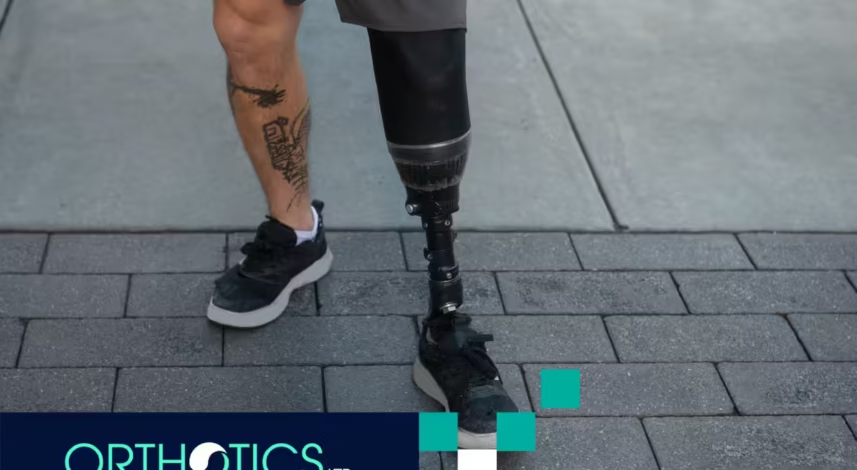
If you or someone in your family is preparing for an amputation, or already living with limb loss, one of the first questions that comes up is a practical one: how does an artificial limb actually stay on, and how does a person make it move?
It is a fair question, and the answer is less mysterious than it sounds. A prosthesis is a system of parts, each doing a specific job, assembled around one particular person’s anatomy and goals. Understanding how prosthetics work makes it much easier to have a useful conversation with a prosthetist about which design may suit you.
Below is a plain-language look at the parts of a prosthetic limb, how different types are controlled, and what the evaluation and fitting process involves.
How Do Prosthetic Limbs Work?
A prosthesis replaces the function of a missing limb, or part of one, by transferring force between the body and the device.
Weight or effort travels from the residual limb into the socket, through the structural components, and out to the ground or to an object being held. Movement travels the other way, from the user’s muscles, body motion, or from sensors and a small processor, into the joints and terminal device.
Every prosthesis has to do three things at once: stay securely attached, carry load safely, and respond when the user wants it to move. How well it does each of those depends on how the individual parts are matched to the person wearing it.
The Main Parts of a Prosthetic Limb
Prosthetic limb components vary by design, but most devices share the same building blocks.
The Socket
The prosthetic socket is the interface between the residual limb and the rest of the device. It is shaped to the individual limb so that pressure sits where the tissue tolerates it and is relieved where it does not. Because the socket carries load and controls how the prosthesis tracks with the body, socket fit influences nearly everything else about how the limb performs. You can read more about socket design and socket systems on our site.
The Liner and Suspension System
The prosthetic suspension system is what keeps the device attached. Approaches include silicone or gel liners with a locking pin, suction, elevated vacuum, and straps or harnesses. Different suspension methods manage motion, sweat, volume change, and ease of donning differently, which is one reason the choice is made individually rather than by rule.
Joints and Structural Components
Knees, ankles, elbows, wrists, pylons, and adapters give the limb its shape and articulation. These are selected and aligned to match the person’s amputation level and activity demands.
The Terminal Device
At the end of an arm prosthesis, this may be a hook, a passive hand, or a powered hand. On a leg prosthesis, it is the foot or blade.
The Control System
This is what translates intent into movement, and it is the part that differs most between device types.
The Cover
Optional finishing that affects appearance. Some users want it; others prefer the components exposed.
Types of Prosthetic Limbs and How They Are Controlled
Prosthetic limb control systems fall into a few broad categories. Most people are candidates for more than one, which is why the options are worth discussing rather than assuming.
| Type | How it is controlled | Often considered for |
|---|---|---|
| Body-powered prosthetics | Cables and a harness, driven by shoulder and trunk movement | Users who want mechanically simple, durable control and direct physical feedback through the cable |
| Myoelectric prosthetics | Electrodes read electrical signals from residual muscles and drive small motors | Upper-limb users with usable muscle signals who want grip control without a harness |
| Passive prosthetics | No active movement; positioned by the other hand or used for stabilising and support | Users prioritising appearance, or specific tasks where a stable, positionable limb is enough |
| Hybrid prosthetics | Combines body-powered and externally powered elements in one device | Higher-level upper-limb amputations where one control method alone is limiting |
| Microprocessor-controlled prosthetics | Sensors read position, load, and speed many times per second; a processor adjusts resistance at the joint | Lower-limb users whose walking demands include uneven ground, slopes or stairs |
None of these is inherently the better choice. A body-powered arm can outperform a powered one for heavy or dirty work. A microprocessor knee is not automatically the right answer for someone whose activity is mostly indoors and level. Candidacy for powered and microprocessor components is also affected by residual muscle signals, limb length, skin condition, weight, and in many cases what a payer will authorise.
Our upper-limb prosthetics and lower-limb prosthetics pages go into the options for each in more detail.
Why Two People With the Same Amputation Get Different Devices
Functional prosthetics are prescribed, not picked off a shelf. The design comes out of several factors considered together:
- Amputation level. A transtibial (below-knee) prosthesis has different requirements from a transfemoral (above-knee) one, because more joints have to be replaced and more control has to be recovered.
- Residual limb anatomy. Length, shape, soft tissue coverage, bony prominences, scarring, skin integrity, and sensation all shape socket design.
- Functional goals. Returning to a specific job, managing stairs at home, carrying a grandchild, and competing in sport are different targets that point to different components.
- Daily activities and environment. Terrain, surfaces, how much standing is involved, whether the device will get wet.
- Clinical assessment. Strength, range of motion, balance, cardiovascular capacity, cognition, vision, and other medical conditions all factor into what is appropriate and safe.
This is also why prosthetic limb technology on its own does not determine results. The most advanced component in a poorly fitting socket will underperform a simpler component in a well-fitting one.
The Prosthetic Fitting Process
The prosthetic fitting process is staged, and each stage feeds the next.
1. Evaluation
A prosthetist examines the residual limb and reviews medical history, current mobility, home and work environment, and goals. This conversation determines the prescription, so it is worth arriving with specific activities in mind.
2. Shape Capture and Socket Design
The limb shape is captured and modified to create a socket that loads pressure-tolerant areas and relieves sensitive ones.
3. Component Selection
Feet, knees, hands, wrists, suspension, and control method are selected against the goals identified in the evaluation, and against what has been authorised.
4. Diagnostic Fitting
A test socket is commonly used so fit can be assessed and corrected before the definitive device is built.
5. Delivery and Alignment
Alignment is the spatial relationship between the socket and the components, and it is adjusted with the user standing and moving. Small alignment changes can noticeably change how the device feels and behaves.
6. Rehabilitation and Training
Prosthetic rehabilitation usually involves therapy alongside prosthetic care: skin and limb care, donning and doffing, wearing schedules, balance and gait work for lower limb, and task-specific training for upper limb. How long this takes varies widely between individuals.
7. Follow-Up and Prosthetic Adjustments
Residual limb volume changes, activity levels change, and components wear. Ongoing adjustment, from sock ply changes and socket modifications to component servicing, is a normal part of prosthetic care rather than a sign something went wrong. Your prosthetist will advise on a review schedule appropriate to your situation.
Prescription and Coverage
Prostheses are prescribed devices. In most cases, a physician’s order and supporting clinical documentation are required, and the specific components authorised depend on the payer, the plan, and the documented functional level. Coverage rules differ significantly between commercial plans, Medicare, and Medicaid.
Rather than guessing, it is worth having your benefits checked before decisions are made about components. Our team can help you review this. See our insurance and coverage information for what to have ready.
Talk Through Your Prosthetic Options
The right prosthesis is the one built around your anatomy, your goals, and your daily life, and that starts with an evaluation rather than a catalogue.
If you are weighing options for yourself or a family member, explore our prosthetic options or schedule an individual evaluation with our team. We can also review your coverage before any decisions are made about components.
Frequently Asked Questions
1. How do prosthetic limbs work?
A prosthesis transfers load between the body and the device through a fitted socket, holds position with a suspension system, and moves through a control method that may be body-powered, externally powered, or passive. The specific combination is chosen for the individual.
2. What are the main parts of a prosthetic limb?
Socket, liner and suspension, structural components and joints, terminal device such as a foot or hand, control system, and an optional cosmetic cover.
3. How are different types of prosthetics controlled?
Body-powered devices use cables and body movement. Myoelectric devices read muscle signals through surface electrodes. Microprocessor joints adjust resistance using sensor input. Passive devices are positioned manually. Hybrid devices combine methods.
4. What happens during the prosthetic fitting process?
Evaluation, shape capture and socket design, component selection, a diagnostic fitting, delivery with alignment, rehabilitation training, and ongoing follow-up adjustments. Timelines vary by individual and by clinical circumstances.
5. Does insurance cover prosthetic limbs?
Many plans provide some prosthetic benefit, but coverage, documentation requirements, and which components are approved vary by plan and by the documented functional level. An individual benefits check is the only reliable way to know what applies to you.
Sources:
- https://www.physio-pedia.com/Lower_Limb_Prosthetic_Sockets_and_Suspension_Systems
- https://discovery.med.utah.edu/2019/prosthetic-limbs-with-neural-connections/
- https://pmc.ncbi.nlm.nih.gov/articles/PMC10449377/
- https://news.mit.edu/2024/prosthesis-helps-people-with-amputation-walk-naturally-0701
- https://pubmed.ncbi.nlm.nih.gov/24287243/
