

How Prosthetics Work: Understanding Functional Prosthetics
Key Highlights
- Prosthetic limbs restore mobility and improve quality of life.
- Advanced prosthetic limb technology mimics natural movement.
- Functional prosthetics are designed for daily activities and specialized needs.
- Prosthetic components include sockets, joints, and control systems.
- Choosing the right prosthetic requires professional evaluation and customization.
How Do Prosthetic Limbs Work?
Prosthetic limbs have transformed the lives of millions worldwide, offering mobility, independence, and renewed confidence for people with limb loss. Understanding how prosthetics work involves exploring the technology behind them, the types of prosthetic limbs available, and the methods used to control and integrate them into daily life.
Whether a person needs a prosthetic for a leg, arm, hand, or specialized activity, functional prosthetics are designed to restore as much natural movement and capability as possible. Let’s explore the fascinating world of prosthetic limb technology.
The Basics of How Prosthetics Work
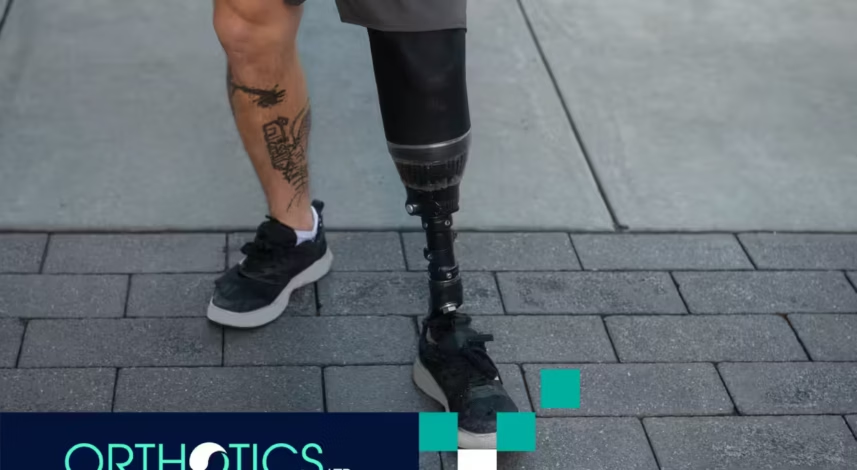
A prosthetic limb functions as a replacement for a missing body part, enabling the user to perform activities they may have lost due to amputation, injury, or congenital conditions.
At its core, a prosthetic limb includes several key components:
- Socket: The interface between the residual limb and the prosthesis. It must fit precisely to ensure comfort, stability, and effective load transfer.
- Suspension System: Keeps the prosthetic securely attached. Common methods include straps, suction, or vacuum-assisted systems.
- Joints and Connectors: Mimic natural joint movement, such as elbows, knees, or ankles. Modern prosthetics often include adjustable or motorized joints.
- Control System: Allows the user to move the prosthetic intentionally. This can range from body-powered mechanisms to advanced myoelectric systems.
- Cosmetic Cover: Optional, but can improve appearance and user confidence.
Each component is carefully designed to meet individual needs, taking into account comfort, functionality, and the user’s lifestyle.
Types of Prosthetic Limbs
Understanding the types of prosthetic limbs helps explain how prosthetics work in practical terms. Prosthetic limbs can be broadly categorized based on function and control method:
| Type of Prosthetic | Description | Ideal Users |
|---|---|---|
| Body-Powered Prosthetics | Operated using cables and harnesses connected to body movement. | Users seeking durability and simple control for daily activities. |
| Myoelectric Prosthetics | Uses electrical signals from residual muscles to control movement. | Users want more natural, precise movement, often for upper limbs. |
| Passive Prosthetics | Primarily cosmetic with limited or no functional movement. | Users seeking appearance rather than active mobility. |
| Hybrid Prosthetics | Combines mechanical and electronic components for improved function. | Users needing specialized functions for work or sports. |
These categories demonstrate the versatility of prosthetic limb technology. Each type serves different goals, from basic mobility to highly functional tasks like running, typing, or grasping objects.
How Prosthetic Limb Technology Mimics Natural Movement
Modern prosthetics aim to replicate the movement of natural limbs as closely as possible. This is achieved through advancements in materials, sensors, and control systems.
1. Advanced Materials
Lightweight metals like titanium, carbon fiber, and high-strength plastics are used to create prosthetics that are both strong and light. This reduces fatigue and improves usability.
2. Microprocessor-Controlled Joints
Microprocessors in knee or ankle prosthetics allow dynamic adjustments while walking. Sensors detect motion and terrain, automatically adjusting resistance and providing smoother, more natural gait patterns.
3. Myoelectric Control Systems
Upper limb prosthetics often rely on myoelectric sensors that detect electrical signals from the user’s residual muscles. These signals are translated into precise movements, allowing for gripping, lifting, and other daily activities.
4. Functional Prosthetics for Specialized Needs
Activity-specific or athletic prosthetics are designed to meet unique demands. For example:
- Running blades for track and field athletes.
- Adaptive hands for musicians or workers requiring fine motor skills.
- Waterproof prosthetics for swimming and aquatic activities.
These innovations ensure that prosthetic limbs are not just replacements but functional extensions of the user’s body.
The Fitting and Customization Process
A key factor in how prosthetics work is proper fitting and customization. Every prosthetic must be tailored to the user’s body, lifestyle, and goals.
Step 1: Assessment
A prosthetist evaluates the user’s residual limb, mobility goals, and daily activity needs. They also consider medical history and any comorbidities.
Step 2: Casting and Socket Design
Precise measurements of the residual limb are taken, often using 3D scanning technology. The socket is then designed for comfort and stability.
Step 3: Component Selection
The prosthetist selects joints, suspension systems, and control mechanisms that match the user’s functional requirements.
Step 4: Fitting and Training
Once the prosthetic is assembled, the user undergoes training to learn how to use it effectively. This may include gait training, strength exercises, and functional skill development.
Step 5: Ongoing Adjustments
Residual limbs can change over time, so regular follow-ups are essential to maintain comfort and function.
Benefits of Functional Prosthetics
Functional prosthetics improve quality of life in multiple ways:
- Restores mobility and independence.
- Reduces risk of secondary injuries caused by compensatory movements.
- Supports psychological well-being by boosting confidence and social participation.
- Enables participation in sports, work, and hobbies.
By combining advanced prosthetic limb technology with personalized fitting, users can regain much of the functionality they lost.
Challenges and Future Innovations
While prosthetic technology has advanced tremendously, challenges remain:
- Cost: High-tech prosthetics can be expensive.
- Maintenance: Electronic or mechanical components require regular care.
- Adaptation: Users need time and training to maximize functionality.
Future innovations include:
- Brain-Computer Interface Prosthetics: Direct neural control for more intuitive movement.
- Bionic Limbs: Fully integrated prosthetics with sensory feedback.
- 3D-Printed Prosthetics: Affordable, customizable solutions with faster production times.
These innovations promise to make prosthetic limbs even more functional, adaptable, and accessible.
Final Thoughts
Understanding how prosthetics work involves appreciating the blend of engineering, biomechanics, and human adaptability. Functional prosthetics use advanced materials, intelligent control systems, and precise fitting to restore mobility and independence.
For those seeking expert guidance in selecting and customizing prosthetic limbs, professional prosthetists play a crucial role in ensuring comfort, safety, and optimal performance. At Orthotics Ltd., our team specializes in crafting high-quality prosthetics tailored to each individual, helping users regain their mobility and confidence. Contact us today!
Frequently Asked Questions
1. How long does it take to adjust to a prosthetic limb?
Adjustment varies by individual but typically takes several weeks to months of consistent training and use.
2. Can prosthetic limbs perform complex movements?
Yes, advanced prosthetics, especially myoelectric and microprocessor-controlled limbs, can perform a wide range of movements, including gripping, walking, and running.
3. Are prosthetic limbs covered by insurance?
Many insurance plans cover prosthetics, though coverage depends on the type of limb and the plan’s policies.
4. How often should a prosthetic limb be replaced or adjusted?
Prosthetic limbs usually require regular check-ups every 6–12 months, with replacement needed every 3–5 years, depending on wear and technology updates.
5. Can children use functional prosthetics?
Yes, pediatric prosthetics are available and can be customized as children grow, supporting mobility and daily activities.
Sources:
- https://www.msdmanuals.com/home/special-subjects/limb-prosthetics/overview-of-limb-prosthetics
- https://news.mit.edu/2024/prosthesis-helps-people-with-amputation-walk-naturally-0701
- https://www.sciencedirect.com/science/article/abs/pii/S1934148214003013
- https://magazine.medlineplus.gov/article/prosthetics-through-the-ages
- https://pmc.ncbi.nlm.nih.gov/articles/PMC7340716/
