

How Myoelectric Prosthetics Work: A Complete Guide
Key Highlights:
- Myoelectric prosthetics use electrical signals from muscle contractions to control artificial limbs.
- Electrodes detect these signals, which are processed to trigger specific movements in the prosthesis.
- Advancements in technology have led to more intuitive control and enhanced functionality.
- Proper fitting and training are essential for optimal use and comfort.
- Myoelectric prosthetics offer improved aesthetics and functionality compared to traditional prostheses.
Myoelectric prosthetics represent a significant advancement in the field of prosthetics, offering users enhanced control and functionality. Unlike traditional body-powered prostheses, which rely on harnesses and cables, myoelectric prosthetics are powered by electric motors and controlled through electrical signals generated by the user’s own muscles.
Understanding Myoelectric Control
The term “myoelectric” refers to the electrical properties of muscles. When a muscle contracts, it produces an electrical signal known as an electromyogram (EMG). These signals are detected by surface electrodes placed on the skin over the residual limb. The electrodes pick up these electrical signals and transmit them to a microprocessor within the prosthesis. The microprocessor then interprets these signals and activates the motors in the prosthetic limb to perform specific movements, such as opening and closing the hand or bending the elbow.
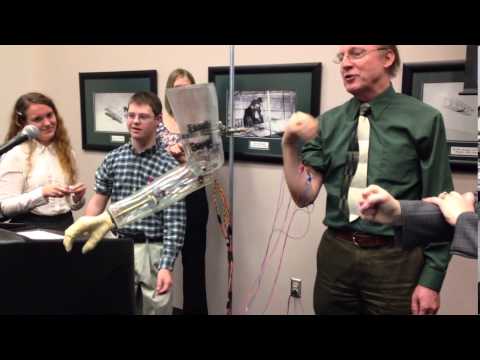
Components of a Myoelectric Prosthesis
A typical myoelectric prosthesis consists of several key components:
- Electrodes: Placed on the skin over the residual limb, these detect the electrical signals generated by muscle contractions.
- Microprocessor: Interprets the signals from the electrodes and sends commands to the motors.
- Motors and Actuators: Drive the movements of the prosthetic joints, such as the fingers, wrist, or elbow.
- Power Source: Batteries that provide the necessary energy for the motors and electronics.
- Socket: The interface between the residual limb and the prosthesis, ensuring a secure and comfortable fit.
How Movement is Controlled
When the user contracts a muscle in the residual limb, the electrodes detect the resulting EMG signals. These signals are then amplified and processed by the microprocessor to determine the intended movement. For instance, a slight muscle contraction might signal the prosthetic hand to open, while a stronger contraction could close it. Some advanced systems allow for proportional control, enabling the user to adjust the speed and force of movements based on the intensity of their muscle contractions.
Advantages of Myoelectric Prosthetics
- Intuitive Control: Users can control the prosthesis using the same muscle signals they would use to move a natural limb.
- Enhanced Functionality: Modern myoelectric prostheses can perform a wide range of movements, including fine motor tasks.
- Improved Aesthetics: These prostheses often have a more natural appearance compared to traditional body-powered devices.
- Reduced Effort: The elimination of harnesses and cables reduces the physical effort required to operate the prosthesis.
Challenges and Considerations
While myoelectric prosthetics offer numerous benefits, there are also challenges to consider:
- Battery Life: The prosthesis requires regular charging to ensure continuous operation.
- Signal Interference: Factors like skin condition, muscle fatigue, and electrode placement can affect signal quality.
- Cost: High-quality myoelectric prostheses can be expensive, and insurance coverage may vary.
- Training: Users need to undergo training to effectively control the prosthesis and integrate it into daily activities.
Future Directions
Advancements in technology continue to improve the functionality and accessibility of myoelectric prosthetics:
- Enhanced Sensors: Development of more sensitive electrodes and sensors to improve signal detection.
- Neural Integration: Research into direct neural interfaces aims to provide more natural control by connecting the prosthesis directly to the nervous system.
- AI and Machine Learning: Integration of AI to predict user intentions and adapt prosthetic movements accordingly.
- 3D Printing: Allows for custom-designed prostheses that are tailored to the individual’s anatomy and preferences.
Bottomline
Myoelectric prosthetics have transformed the way individuals interact with the world, providing enhanced control, functionality, and independence. For those considering a myoelectric prosthesis, consulting with experts can help determine the best solution tailored to your needs. The team at Orthotics Ltd. offers professional guidance and personalized prosthetic solutions to support your journey. Contact us today!Frequently Asked Questions
1. How do I control a myoelectric prosthesis?
You control a myoelectric prosthesis by contracting the muscles in your residual limb. Electrodes placed on the skin detect these muscle signals and translate them into movements of the prosthetic limb.
2. Are myoelectric prostheses suitable for all amputees?
Myoelectric prostheses are suitable for many upper-limb amputees, especially those with below-elbow amputations. However, suitability depends on factors like muscle strength, residual limb condition, and personal preferences.
3. How long does it take to get used to a myoelectric prosthesis?
The adaptation period varies for each individual. With proper training and practice, many users become proficient within a few months.
4. Can I perform everyday tasks with a myoelectric prosthesis?
Yes, myoelectric prostheses are designed to assist with daily activities such as eating, writing, and using tools. The level of functionality depends on the specific device and user training.
5. How often do I need to charge my myoelectric prosthesis?
Charging frequency depends on the prosthesis’s battery capacity and usage. On average, users may need to charge the device every 1-2 days.
Sources:
- https://pmc.ncbi.nlm.nih.gov/articles/PMC4968852/
- https://pubmed.ncbi.nlm.nih.gov/26230500/
- https://pmc.ncbi.nlm.nih.gov/articles/PMC7340716/
- https://www.hopkinsmedicine.org/health/treatment-tests-and-therapies/electromyography-emg
- https://www.nibib.nih.gov/news-events/newsroom/neurally-controlled-prosthetic-ankle-allows-intuitive-balance-correction
