

Prosthetics in the Paralympics: Inspirational Stories of Technology & Triumph
Key Highlights
- Cutting-edge prosthetic technologies (such as carbon-fibre “blades”) enable elite Para athletes to compete at the highest level.
- The Paralympic movement showcases how prosthetics empower mobility, performance, and identity.
- Iconic athletes demonstrate not only physical achievement but emotional resilience, redefining perceptions of disability.
- Advancements in prosthetic design continue to evolve—impacting sport, rehabilitation, and everyday life.
- For clinics and patients alike, these stories underscore the importance of specialist prosthetic & orthotic support, personalised fitting, and long-term care.
The journey from first steps on a prosthetic to podium finishes at the Paralympics is nothing short of remarkable. In the arena of the Paralympic Games, prosthetic limbs are not simply aids—they become instruments of performance, symbols of human potential, and bridges to new identities. This blog dives into the world of prosthetics in the Paralympics: how technology and tenacity converge, the athletes who inspire, and the lessons that apply beyond the field of sport.
Prosthetic Technology and the Paralympic Stage
From limb replacement to a performance tool
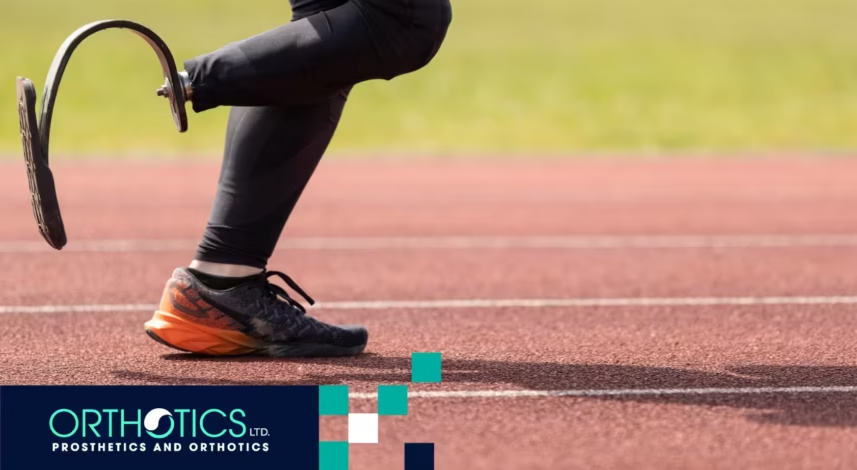
In elite Para sport, prosthetics have evolved far beyond basic limb-replacement devices. A key example is the Flex‑Foot Cheetah: a carbon-fibre “blade” designed to store and release energy, enabling many amputee sprinters and long jumpers to compete at world-class levels.
These devices illustrate several core features:
- Lightweight, high-strength materials (carbon-fibre composites)
- Energy-return design (spring-like action)
- Custom fitting to the athlete’s anatomy, stump geometry, and sport demands
Classification, fairness & performance
On the Paralympic stage, athletes are grouped by classification (e.g., T44, T64) depending on the form of limb loss or impairment. For example, the T64 classification covers athletes with a leg amputation below the knee who compete with a prosthetic running leg.
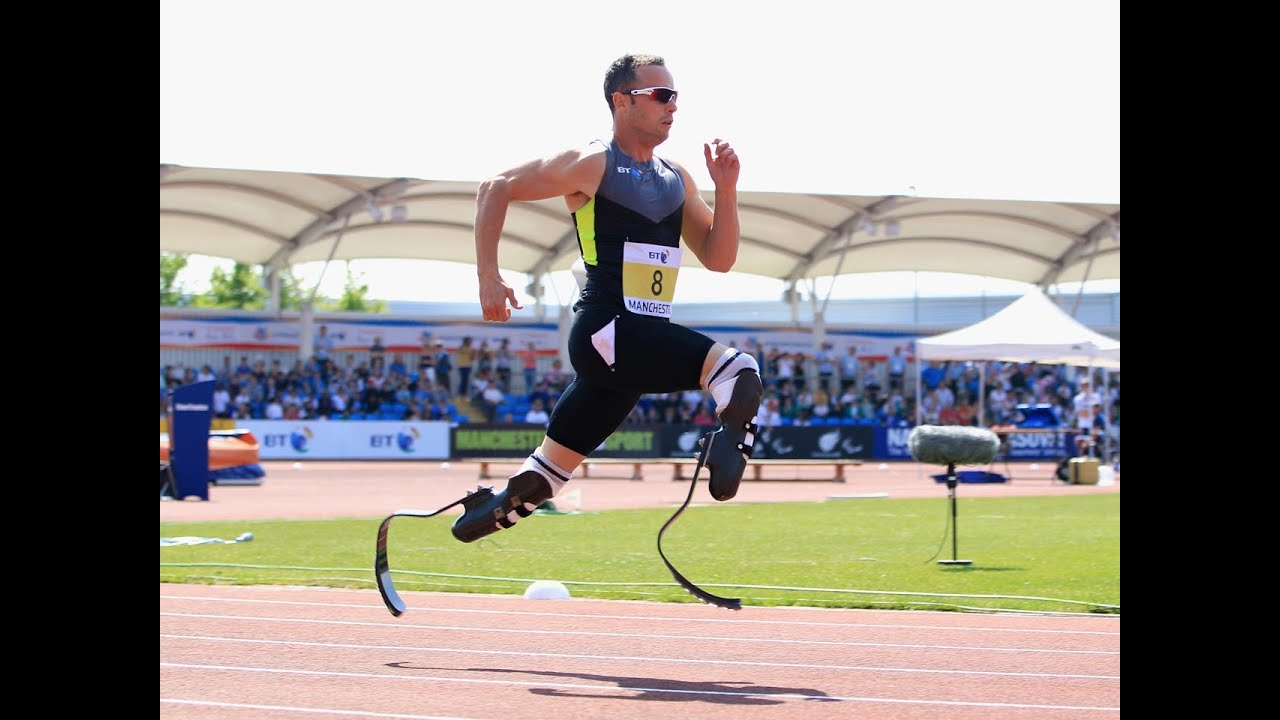
Technology brings not only performance gains, but also questions of fairness. Are prosthetic designs giving athletes an unfair advantage, or simply leveling the playing field? The case of Oscar Pistorius investigated whether his blades provided a net benefit in able-bodied competition.
Inspirational Athlete Stories
Here are three standout athletes whose careers illustrate the transformative role of prosthetics in the Paralympics:
1. Markus Rehm – “The Blade Jumper”
His story is compelling not simply because of the distances he jumps—but because he combines athletic ambition with a deep understanding of prosthetics (he holds a degree in prosthetics & orthotics) and plans beyond sport.
2. Oscar Pistorius – The Trailblazer
3. Kaede Maegawa – Beyond the Track
Technology Meets Training: What Enables Success
Elite Para athletes don’t succeed purely by luck or hero story alone; their success is built on a structured system of training, equipment optimization, and support. The following table highlights key elements:
| Element | Description | Why it matters |
|---|---|---|
| Custom socket & fit | The interface between the residual limb (stump) and prosthetic component. | A good fit prevents skin breakdown, improves control, and provides comfort. |
| Sport-specific componentry | E.g., running blades, sprinting sockets, jumping prosthetics. | These components are engineered for high loads, responsiveness, and performance. |
| Biomechanics and alignment | Precise alignment and tuning of prosthetics to the athlete’s gait and sport mechanics. | Helps maximize power transfer and reduce injury risk. |
| Rehabilitation & training | Strength, conditioning, prosthetic adaptation, and technique work. | Athletes must retrain their movement patterns and optimise energy return. |
| Technology updates & maintenance | Component wear, part replacement, upgrades. | Performance can degrade if equipment isn’t maintained—evident in high-competition resets. |
In short, advanced prosthetics and rigorous athlete preparation form the twin engines of success.
The Broader Impact: Prosthetics Beyond Sport
While the Paralympic stories are inspirational, the ripple effects extend well beyond elite competition:
- Public perception shift: When athletes with prosthetics achieve at the highest levels, society sees prosthetics less as “just a replacement” and more as enablers of possibility.
- Innovation diffusion: Technologies developed for sport often trickle into everyday prosthetic solutions—lighter materials, better socket interfaces, improved biomechanics.
- Motivation & identity: For individuals facing limb loss, seeing athletes succeed fosters hope, self-efficacy and can positively influence rehabilitation outcomes.
Challenges & Evolving Conversations
Cost and access
High-performance prosthetics (especially blades) can cost tens of thousands of dollars. Access remains uneven globally, raising questions of equity.
Regulation and fairness
The debate over whether prosthetics provide an “advantage” continues. Markus Rehm’s case, for instance, raised discussions about whether his blade-leg provided a net benefit when competing against able-bodied athletes.
Maintenance & reliability
Even in the Paralympic Village, organizers reported thousands of repairs for prosthetic and orthotic devices during the Games—highlighting the importance of durability and support infrastructure.
Emotional & identity dimensions
For many amputee athletes, adapting to a prosthetic device involves not only physical adjustment but psychological and identity shifts. The narrative of loss transitions into one of ability and performance.
What This Means for Clinicians, Patients & Support Teams
- Customisation matters: Each athlete (and each wearer) has unique anatomy, goals, sport demands, or daily-life demands. One-size-fits-all simply doesn’t apply.
- Multidisciplinary teamwork: Prosthetists, physiotherapists, trainers, and even psychologists collaborate to enable peak performance.
- Long-term care matters: Prosthetic performance and socket fit change over time (due to body changes, wear, etc.). Ongoing monitoring is key.
- Inspiration matters: Real-world stories of athletes succeeding with prosthetics help motivate new users, destigmatise limb-loss, and set new expectations of potential.
Final Thoughts
The intersection of prosthetics and the Paralympic arena is a compelling space where technology, human spirit, and performance converge. Athletes like Markus Rehm, Oscar Pistorius (controversial though his history is), and Kaede Maegawa remind us that prosthetic devices are far more than mere tools—they are catalysts for possibility, platforms for achievement, and symbols of transformation.
For anyone involved in prosthetic and orthotic care—whether as clinicians, users, athletes, or supporters—the messages are clear: Fit matters, technology matters, training matters—but above all, mindset matters. The world of Para sport shows how the right device, the right support, and the right determination can move someone from rehabilitation to global podiums.
If you or someone in your care is navigating limb loss, exploring prosthetic options, or pursuing sport- or activity-specific goals, working with a specialist prosthetics & orthotics provider who understands high-performance demands becomes exceptionally important. At Orthotics Ltd., we support custom solutions, expert fitting, and long-term follow-up—so that your prosthetic journey is not just about recovery, but about possibility and performance. Contact us today!
Frequently Asked Questions
1. What classifications are used in the Paralympics for leg prosthetic athletes?
In Para athletics, classifications such as T44 (single below-knee amputation) or T64 (below-knee amputation using a prosthetic leg) are used to group athletes by impairment and equipment used.
2. Do prosthetic running blades give a competitive advantage over biological legs?
This topic has been debated. For example, studies around Oscar Pistorius examined energy use, stride patterns, and mechanics. The consensus has been that the advantages are not clear-cut, and regulation seeks to ensure fairness.
3. How important is the socket fit in a sport-specific prosthetic?
Critically important. A well-fitting socket ensures comfort, secure transfer of forces, prevents skin injuries, and maximises responsiveness—especially for high-load sport use.
4. Can people with prosthetics inspired by sport-blades use them for everyday walking?
Not always. Prosthetic devices designed for sprinting or jumping may have trade-offs (e.g., different heel height, less stability at slow walking, less suspension). Every day, walking prostheses are often tuned differently for comfort and endurance rather than peak power.
5. What advancements are emerging in prosthetic technology that may impact Para sport and beyond?
Advances include better materials (lighter, stronger composites), smarter socket interfaces, microprocessor-controlled joints, and improved feedback systems. These innovations gradually filter from elite sport into general-use prosthetics, benefitting a wider population.
Sources:
- https://www.olympics.com/en/sports/paralympic/
- https://www.researchgate.net/figure/Flex-Foot-Cheetah-carbon-prosthetic-foot-By-Anthony-Appleyard-CC-BY-SA-30_fig3_338367456
- https://pubmed.ncbi.nlm.nih.gov/39797642/
- https://www.cnn.com/world/africa/oscar-pistorius-fast-facts
- https://www.laureus.com/world-sports-awards/2024/laureus-world-sportsperson-of-the-year-with-a-disability/markus-rehm
- https://www.paralympic.org/kaede-maegawa
