

Common Myths About Complex Prosthetic Fittings
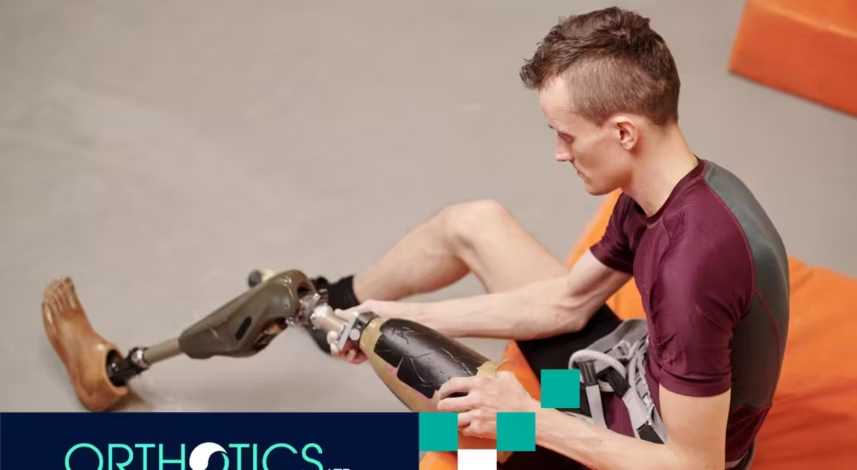
Key Highlights
- Complex prosthetic fittings are highly personalized—not one-size-fits-all.
- Advanced prosthetics are designed for comfort, stability, and long-term use.
- The fitting process involves multiple steps to ensure safety and function.
- Modern materials and technology have greatly improved prosthetic outcomes.
- Ongoing adjustments are normal and essential for optimal performance.
When people hear the phrase complex prosthetic fittings, they often imagine a long, uncomfortable process with uncertain results. Unfortunately, misinformation and outdated assumptions have led to many myths about what prosthetic fittings actually involve—especially for individuals with unique medical, anatomical, or mobility needs.
Complex prosthetic fittings are not rare, experimental, or overly burdensome. In fact, they are a carefully designed, patient-centered process that plays a crucial role in helping individuals regain mobility, confidence, and independence. Understanding what’s true—and what’s not—can help set realistic expectations and reduce unnecessary anxiety for those beginning their prosthetic journey.
In this article, we’ll break down the most common myths about complex prosthetic fittings, explain what really happens during the process, and highlight how modern prosthetic care supports better outcomes than ever before.
What Are Complex Prosthetic Fittings?
Before addressing the myths, it’s important to understand what qualifies as a complex prosthetic fitting. These fittings are typically required when an individual has:
- Irregular residual limb shapes
- Significant volume fluctuations
- Sensitive skin or scar tissue
- Multiple limb loss or high-level amputations
- Neurological, vascular, or orthopedic conditions
- A need for advanced prosthetic components
Complex fittings involve more customization, clinical expertise, and collaboration than standard prosthetic fittings. The goal is not just to attach a device, but to ensure it functions seamlessly with the body and lifestyle of the user.
Myth #1: Complex Prosthetic Fittings Are One-Size-Fits-All
One of the most persistent myths is that prosthetics—especially complex ones—are largely standardized, with minimal customization.
The Reality
Complex prosthetic fittings are highly individualized. No two residual limbs are the same, and factors such as bone structure, muscle tone, skin condition, and daily activity levels all influence the design.
Each fitting may involve:
- Custom socket fabrication
- Specialized liners or suspension systems
- Component selection based on mobility goals
- Repeated assessments and refinements
Customization is what makes complex prosthetic fittings successful. Rather than forcing the body to adapt to a device, the device is designed to adapt to the body.
Myth #2: The Process Is Always Painful
Many people assume that if a prosthetic fitting is “complex,” it must be uncomfortable or painful.
The Reality
While some initial discomfort may occur—as with any medical or orthopedic intervention—modern complex prosthetic fittings prioritize comfort, pressure distribution, and skin protection.
Discomfort often signals:
- Areas needing adjustment
- Volume changes in the residual limb
- The need for liner or socket refinement
Pain is not considered a normal or acceptable outcome. Ongoing communication between the patient and prosthetist ensures that issues are addressed promptly.
Myth #3: Advanced Prosthetics Are Only for Athletes or Young Patients
There’s a misconception that advanced or complex prosthetic solutions are reserved for elite athletes or younger individuals.
The Reality
Complex prosthetic fittings are used across all ages and activity levels. Advanced components can benefit:
- Older adults seeking stability and fall prevention
- Individuals returning to work
- Patients with limited mobility goals
- People managing chronic conditions
The complexity of a prosthetic fitting has more to do with medical and anatomical needs than age or athletic ability.
Myth #4: Once Fitted, No Adjustments Are Needed
Some believe that prosthetic fittings are a one-time event—once the prosthesis is delivered, the process is complete.
The Reality
Complex prosthetic fittings are an ongoing process. Residual limbs naturally change over time due to:
- Weight fluctuations
- Muscle atrophy or strengthening
- Changes in activity level
- Healing and scar maturation
Regular follow-ups and adjustments are essential to maintain comfort, alignment, and performance.
Myth #5: Complex Prosthetic Fittings Take Too Long to Be Worth It
Another common myth is that the time investment outweighs the benefits.
The Reality
While complex prosthetic fittings may take longer than standard fittings, the additional time ensures:
- Better long-term comfort
- Reduced risk of skin breakdown
- Improved mobility and balance
- Fewer complications over time
Rushing the process often leads to setbacks, whereas a thorough fitting supports long-term success.
Myth #6: Technology Makes Prosthetists Less Important
With advancements like microprocessors and digital scanning, some assume technology replaces hands-on expertise.
The Reality
Technology enhances prosthetic care—but it does not replace the skill of a trained prosthetist. Complex prosthetic fittings require:
- Clinical judgment
- Anatomical knowledge
- Experience with diverse patient needs
- Skilled problem-solving
Technology is a tool, not a substitute for professional expertise.
The Truth About the Complex Prosthetic Fitting Process
To better understand how these fittings work, here’s a simplified overview of the typical process:
| Step | Purpose |
|---|---|
| Initial Evaluation | Assess medical history, limb condition, and goals |
| Measurement & Imaging | Capture precise limb shape and alignment |
| Socket Design | Create a custom socket for comfort and stability |
| Test Fitting | Identify pressure points and alignment issues |
| Adjustments | Fine-tune fit based on real-world use |
| Follow-Up Care | Monitor changes and make ongoing improvements |
Each step builds on the last, ensuring the prosthesis supports both function and quality of life.
Why Myths About Complex Prosthetic Fittings Persist
Many myths stem from:
- Outdated information
- Secondhand stories
- Limited exposure to modern prosthetic care
- Fear of the unknown
As prosthetic technology and clinical practices evolve, it’s essential to rely on current, evidence-based information rather than assumptions.
Benefits of Properly Managed Complex Prosthetic Fittings
When myths are replaced with accurate expectations, individuals are more likely to experience positive outcomes, including:
- Increased independence
- Improved mobility and balance
- Reduced discomfort and skin issues
- Greater confidence in daily activities
- Enhanced overall quality of life
Education plays a key role in empowering individuals to actively participate in their prosthetic care.
Final Thoughts
Understanding the realities behind complex prosthetic fittings can make the journey less intimidating and far more empowering. By debunking common myths, individuals can approach the process with confidence, realistic expectations, and a clear understanding of how modern prosthetic care supports long-term success.
For those seeking expert guidance, personalized care, and evidence-based prosthetic solutions, Orthotics Ltd. provides comprehensive prosthetic and orthotic services designed to support comfort, mobility, and quality of life every step of the way. Contact us today!
Frequently Asked Questions
1. What makes a prosthetic fitting “complex”?
A fitting is considered complex when it requires advanced customization due to anatomical, medical, or functional challenges.
2. How long does a complex prosthetic fitting take?
The timeline varies, but it often involves multiple appointments over several weeks to ensure proper fit and comfort.
3. Are complex prosthetic fittings covered by insurance?
Many insurance plans provide coverage, though requirements and approvals vary. Documentation and clinical justification are often needed.
4. Can a complex prosthetic be adjusted later?
Yes. Adjustments are expected and are an important part of maintaining comfort and function over time.
5. Will I need special care for my prosthesis?
Basic daily care is usually sufficient, along with routine checkups to ensure continued proper fit.
Sources:
- https://pmc.ncbi.nlm.nih.gov/articles/PMC8994512/
- https://pmc.ncbi.nlm.nih.gov/articles/PMC9987462/
- https://news.mit.edu/2024/prosthesis-helps-people-with-amputation-walk-naturally-0701
- https://pmc.ncbi.nlm.nih.gov/articles/PMC7340716/
- https://magazine.medlineplus.gov/article/prosthetics-through-the-ages
