

Achilles Tendinitis: How Orthotics & Heel Lifts Help
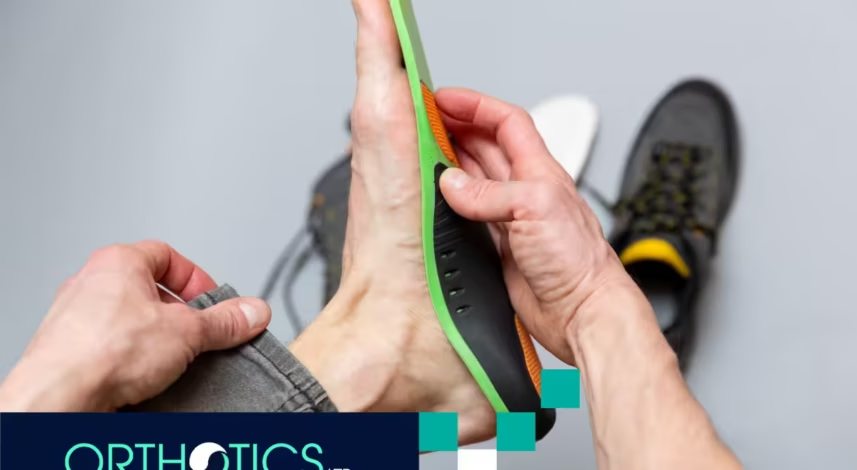
Learn how orthotics and heel lifts ease Achilles tendinitis pain, support healing, and prevent flare-ups. Practical guidance for lasting relief.
Key Highlights
- Achilles tendinitis is an overuse injury of the tendon that connects your calf muscles to your heel bone, and it usually flares from sudden changes in activity, tight calves, or poor foot mechanics.
- Heel lifts reduce load on the tendon by slightly raising the heel, which shortens the working length of the calf and Achilles during the phase when the tissue is most irritated.
- Custom orthotics address the underlying alignment issues, such as overpronation and unstable arches, that keep pulling on the tendon and causing repeated irritation.
- Heel lifts and orthotics play different roles: heel lifts offer short-term unloading and relief, while orthotics target the long-term biochemical cause.
- Getting the right support early usually shortens recovery and lowers the chance of the problem turning chronic or degenerative.
- Pairing the correct foot support with a progressive calf loading program gives the most durable results, and knowing when to get a professional assessment makes a real difference.
What Achilles Tendinitis Actually Is
The Achilles tendon is the thick, strong band of tissue at the back of your ankle that links your calf muscles to your heel bone. Every time you push off to walk, climb stairs, or run, that tendon absorbs and transfers a large amount of force. Because it works so hard and so often, it is also one of the most frequently irritated tendons in the lower body, especially in active adults and people who spend long hours on their feet. Achilles tendinitis is inflammation and irritation of this tendon, typically brought on by repetitive stress rather than a single dramatic injury. It tends to build gradually. Many people first notice a mild ache or stiffness at the back of the heel in the morning or after sitting for a while, then dismiss it and keep training or standing on it. Over time, that low-grade irritation can develop into a stubborn, painful condition that limits how far you can walk or how hard you can train. Clinically, the condition usually falls into one of two patterns. Non-insertional (or midportion) tendinitis affects the middle section of the tendon, a few centimeters above where it attaches to the heel. Insertional tendinitis affects the point where the tendon meets the heel bone itself, and it can involve bone spurs or hardened tissue. This distinction matters more than most people realize because it changes how heel lifts and orthotics should be used. Treatment that helps one pattern can occasionally aggravate the other if applied without care, which is one reason a proper assessment is worth the time.Why It Happens: The Common Triggers
Achilles tendinitis rarely comes from nowhere. In most cases, it develops when the load placed on the tendon outpaces its ability to recover. A few patterns show up again and again:- Doing much, doing soon. Ramping up running mileage, returning to sport after time off, or starting an intense new routine puts more work on the tendon than it is conditioned to handle.
- Tight or weak calf muscles. When the calf is stiff or weak, more strain is transmitted directly into the tendon.
- Poor foot mechanics. Feet that roll inward excessively (overpronation) or have very high arches change the angle of pull on the tendon and create uneven stress.
- Unsupportive footwear. Flat, worn-out, or overly flexible shoes give the tendon little help absorbing shock.
- Standing occupations. Long shifts on hard floors keep the tendon under near constant low-level load with little chance to recover.
How Heel Lifts Help
A heel lift is a simple wedge placed under the heel inside your shoe. It sounds almost too basic to matter, yet it is one of the most effective early interventions for an irritated Achilles tendon, and the reasoning is purely mechanical. When you raise the heel slightly, you reduce the amount that the ankle has to bend upward during standing and walking. That, in turn, shortens the effective working length of the calf and Achilles complex. A tendon that is being asked to stretch and load less on every step is a tendon that gets a chance to calm down. In practical terms, heel lifts take a meaningful share of the strain off the tissue during the window when it is most sensitive. Heel lifts are particularly useful in the early, painful stage of recovery and for insertional cases, where reducing tension at the attachment point can bring quick relief. They are best thought of as a short-to-medium-term tool. They buy comfort and create room for the tendon to heal, but they do not correct the deeper alignment issues that may have caused the problem in the first place. This is where orthotics come in.How Custom Orthotics Help
If heel lifts unload the tendon, custom orthotics address the reason it was overloaded to begin with. An orthotic is a support device fitted inside the shoe, and a custom orthotic is shaped to the specific contours and mechanics of your foot rather than a one-size-fits-all mold. For Achilles tendinitis, orthotics help in several connected ways. They control excessive pronation, so the foot no longer collapses inward and twists the line of pull on the tendon. They support the arch, which distributes the load more evenly across the foot and up the leg. Many are built with a slight heel raise incorporated directly into the device, combining the benefit of a heel lift with proper alignment in a single unit. And by improving overall foot posture, they reduce the repetitive micro-stresses that quietly keep a tendon inflamed. The real value of a custom device is that it targets your mechanics. Two people with Achilles pain can have completely different foot types, and a support that helps one may do little for the other. A high-arched, rigid foot needs shock absorption, while a flat, mobile foot needs stability and motion control. Matching the device to the foot is what turns an orthotic from a comfort insert into a genuine treatment.Heel Lifts vs. Custom Orthotics vs. Off-the-Shelf Insoles
Because these options are often confused, here is a straightforward comparison of what each one does and when it fits best.| Feature | Heel Lifts | Custom Orthotics | Off-the-Shelf Insoles |
|---|---|---|---|
| Primary role | Unload the tendon by raising the heel | Correct foot alignment and mechanics | General cushioning and comfort |
| How it helps the Achilles | Shortens calf and tendon working length, easing strain | Controls pronation, supports the arch, and can include a built-in heel raise | Adds soft padding but limited biomechanical correction |
| Best suited for | Early, painful phase and insertional cases | Long-term relief and prevention, especially with mechanical causes | Mild cases or minor comfort needs |
| Fit | Generic wedge, quick to add | Shaped to your individual foot | Standard sizing |
| Typical timeframe | Short to medium term | Ongoing support and prevention | Temporary relief |
In practice, the strongest results often come from a staged approach: heel lifts or a heel raise for early relief, then a transition into custom orthotics that keep the foot aligned once the acute pain settles.
A Note From Our Practice
We often see a familiar story walk through the door. Recently, we worked with a recreational runner in his forties who had gradually increased his weekly distance over a couple of months and started feeling a deep, nagging ache in the back of his heel. It was worst first thing in the morning and after his runs. He had already tried rest and a generic drugstore insole with little improvement. When we assessed his gait, the cause was clear. His feet were rolling inward noticeably as he loaded each step, which was placing an uneven, repetitive pull on the tendon with every stride. We fitted him with heel lifts to calm the immediate irritation, then built a pair of custom orthotics designed to control that inward roll and support his arches. Alongside the devices, we guided him through a gentle, progressive calf-loading routine so the tendon could rebuild its capacity rather than simply being protected. The combination worked the way it usually does when the mechanics are correctly identified. The morning stiffness eased first, then his tolerance for walking and light running returned, and eventually he was able to rebuild his mileage without the pain returning. His experience is a good illustration of a point we make often: rest alone rarely fixes an Achilles that is being mechanically overloaded, because the moment you return to activity, the same forces are still there. Address the mechanics, and the tendon finally gets a fair chance to recover.What Good Treatment Looks Like
Getting a lasting result from Achilles tendinitis is less about any single product and more about a coordinated plan. A thorough approach usually includes a few pillars working together. First is an accurate assessment. Identifying whether the problem is insertional or midportion, and how your foot moves when you walk, determines which supports will actually help. Guessing at this stage is where a lot of home treatment goes wrong. Second is appropriate load management. That does not mean total rest, which can leave the tendon weaker and slower to bounce back. It means adjusting activity so the tissue is challenged enough to strengthen but not so much that it stays inflamed. Third is the right support at the right time. Heel lifts for early relief, custom orthotics for ongoing correction, and footwear that complements both rather than working against them. Fourth is a strengthening program. A progressive calf and Achilles loading routine, introduced at the correct stage, builds the tendon’s resilience so the problem is less likely to return. Support devices and exercise are patterns, not alternatives. Handled together, these elements not only relieve current pain but also lower the odds of the condition becoming a recurring frustration.When to Seek Professional Help
Mild, occasional stiffness can sometimes settle with sensible adjustments to footwear and activity. However, there are clear signs that it is time to have your feet properly evaluated rather than continuing to manage on your own. Reach out for a professional assessment if the pain has lasted more than a couple of weeks, if it is getting worse rather than better, if it limits your walking or your work, or if it keeps returning every time you try to resume activity. A sudden, sharp pain with a snapping sensation is different again and warrants prompt medical attention, as it can indicate a tendon tear rather than tendinitis. The earlier a mechanical problem is identified and addressed, the simpler it usually is to resolve. Chronic, degenerative tendon conditions are far more stubborn than a fresh case, which is exactly why timely, targeted care is worth pursuing.Getting the Right Support for Lasting Relief
Achilles tendinitis is a mechanical problem at heart, and it responds best to mechanical solutions. Heel lifts unload an irritated tendon and bring quick relief, while custom orthotics correct the alignment issues that caused the overload in the first place. Used together and paired with sensible activity and strengthening, they offer a genuine path out of pain rather than a temporary patch. At Orthotics Ltd., our team assesses how your feet actually move, identifies the true source of your Achilles pain, and builds a support plan tailored to you, from heel lifts for early relief to fully custom orthotics designed for your foot. We proudly serve patients across New York and the surrounding areas. If heel pain is holding back your runs, your workouts, or simply your day, do not wait for it to become chronic. Contact us today to schedule your assessment and take the first step toward walking, standing, and moving comfortably again.Frequently Asked Questions
1. How long does it take for orthotics and heel lifts to relieve Achilles tendinitis?
Many people feel a reduction in strain and morning stiffness within the first couple of weeks of using a well-fitted heel lift, since the tendon is immediately under less load. Full recovery, however, depends on the severity of the case, your foot mechanics, and how consistently you combine the support with load management and strengthening. Correcting the underlying cause with custom orthotics is what tends to produce lasting, rather than temporary, relief.2. Can I just buy heel lifts and insoles from a store instead of getting custom orthotics?
Off-the-shelf products can offer short-term comfort and are sometimes enough for very mild cases. The limitation is that they are not shaped to your foot and do not correct specific mechanical faults like overpronation. If your tendinitis is being driven by how your foot moves, a generic insert often leaves the root cause untouched, which is why the pain frequently returns. A proper assessment helps you avoid spending money on products that were never going to fix your particular problem.3. Will I have to wear orthotics forever?
Not necessarily. Heel lifts are usually a short-to-medium-term tool used during the painful phase. Custom orthotics may be worn longer term, especially if your foot structure is the ongoing driver of the strain, but many people use them alongside a strengthening program that improves the tendon’s resilience over time. Your reliance on support is guided by your individual mechanics and how well the tendon recovers.4. Is it safe to keep exercising with Achilles tendinitis?
Complete rest is rarely the best answer, but pushing through significant pain is not either. The goal is to modify your activity so the tendon is loaded enough to heal and strengthen without being overwhelmed. The right balance is different for every person and stage, which is where professional guidance and properly fitted support make the process safer and more effective.5. Do heel lifts and orthotics help both types of Achilles tendinitis?
They can help both insertional and midportion tendinitis, but the details matter. Heel lifts are often especially useful for insertional cases because they reduce tension at the attachment point. The specifics of how a device is built and used should be matched to your particular pattern, which is another reason an accurate diagnosis comes first.Sources:
- https://www.mayoclinic.org/diseases-conditions/achilles-tendinitis/symptoms-causes/syc-20369020
- https://my.clevelandclinic.org/health/diseases/tendinosis
- https://www.pennmedicine.org/conditions/tendinosis
- https://my.clevelandclinic.org/health/diseases/21553-achilles-tendinitis
- https://www.hopkinsmedicine.org/health/conditions-and-diseases/achilles-tendon-injuries
