

The Summer Socket Survival Guide: Managing Sweat, Heat, and Skin in Your Prosthetic
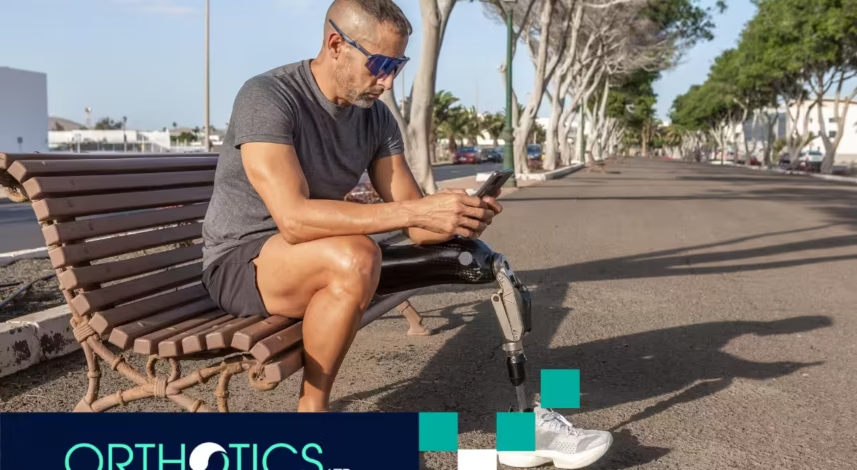
If you wear a prosthetic socket, summer is your toughest season. Heat softens the residual limb. Sweat saturates your liner. Socks slide. Skin breaks down. By August, you’re changing socks three times a day and still feeling the slip. This guide covers the practical strategies that work: material choices, behavior changes, and socket modifications that can transform your summer.
Why Summer Is Uniquely Brutal for Socket Users
Summer isn’t just uncomfortable for prosthetic users. It’s a cascade of biomechanical and physiological challenges that most non-prosthetic wearers never experience.
When temperature rises, your body responds with vasodilation: blood vessels expand to radiate heat outward, which increases sweating volume. But for a prosthetic user, this creates a double problem. First, heat causes temporary swelling of the residual limb, which changes socket fit even before sweat enters the equation. Second, the enclosed socket environment traps that moisture against your skin with nowhere to evaporate. Your liner becomes saturated. Your socks lose their integrity. The fit destabilizes.
Socket materials compound the issue. Silicone liners become tackier in heat, increasing friction. Certain thermoplastic sockets can soften or warp if left in a hot car. Even suction-lock systems designed for year-round stability weaken when liners are damp.
Your skin is the vulnerable point. Heat-induced swelling softens tissue, making it more prone to breakdown under friction and maceration (the white, pruney texture that forms when skin stays wet too long). Combined with the increased weight-bearing fatigue that heat causes (your body works harder just to regulate temperature), the socket interface experiences more shear force at the precise moment your skin is least resilient.
The Four Main Summer Socket Problems
Understanding what’s happening to your body and socket helps you recognize problems early and address them before they sideline your summer.
Skin Breakdown and Maceration
Skin breakdown in a hot socket starts quietly. You might notice white, pruney-looking patches on your residual limb. The skin feels soft and vulnerable. Redness appears, often without obvious friction marks. This is maceration: prolonged skin softening under moisture.
Maceration is the gateway to more serious issues. Softened, damaged skin can’t protect against bacteria. It tears easily under normal socket friction. A small patch of concern can become an open wound within 24 hours if the underlying cause (trapped sweat, poor drying) continues.
The early warning signs matter. If you spot white patches, redness, or soft spots when you remove your prosthetic, dry your residual limb completely and leave the socket off for at least 2-3 hours. If these signs don’t resolve within 24 hours, contact your orthotist.
Slipping and Pistoning
Suction sockets depend on an airtight seal between liner and skin. When your liner is saturated with sweat, that seal fails. Moisture acts like a lubricant. Your prosthetic slips with each step.
Pin-lock and mechanical suspension systems aren’t immune. Even with a locking pin, a saturated liner loses grip. The residual limb swells from heat. The socket fit loosens. You’re changing socks to compensate for fit, which temporarily works, but the underlying problem is moisture, not volume alone.
Slipping creates real safety risks. A prosthetic that moves around your residual limb increases fall risk during ambulation. It changes your gait in ways that stress your sound leg. Over time, that altered gait causes knee and hip pain in your non-amputee side.
Bacterial and Fungal Infections
Summer heat creates the perfect environment for bacteria and fungi: warm, moist, occluded skin.
Folliculitis typically appears as small red bumps, often at hair follicles, sometimes with a whitehead. It’s caused by bacteria (usually Staphylococcus aureus) colonizing hair follicles in warm, sweaty, friction-prone areas. Mild folliculitis resolves with cleanliness and drying. Severe cases require antibiotic treatment.
Fungal infections (tinea, athlete’s foot patterns) show up as red, itchy patches that don’t follow normal friction patterns. They thrive in the damp, warm socket environment. Unlike bacterial infections, they spread slowly and require antifungal medication.
“Smell” is the clinical sign people often miss. If your residual limb or liner develops a noticeably foul odor beyond normal sweat, that’s bacteria or fungus at high enough volume to warrant medical attention. Don’t wait for visible symptoms. Call your orthotist.
Sock Saturation
Socks are your first line of defense against moisture in the socket. Quality sweat-wicking socks pull moisture away from your skin so it evaporates from the surface of the sock rather than pooling at the liner interface.
Cotton socks fail in summer. They absorb moisture and hold it against your skin. By midday, a cotton sock is waterlogged, losing its cushioning properties and creating friction. Wet cotton also breaks down under the pressure of socket weight-bearing.
Moisture-wicking synthetic blends (CoolMax, X-Static, polyester blends) pull that sweat away. But in high-sweat conditions, even quality socks degrade. A sock that’s 50% saturated loses its ply consistency and structural integrity. It bunches. It creates pressure points. New pressure points increase friction. Increased friction increases sweating.
This is the fit-instability cycle: wet sock leads to fit changes, which create new friction points, which trigger more sweating, which saturates the next sock. By midsummer, patients find themselves carrying six or more socks per day just to maintain usable fit. That’s the sign that sock management alone isn’t enough.
Material Solutions That Actually Work
When behavioral adjustments hit their limit, the right materials can make a real difference.
Perforated Liners
Perforated liners have small, strategically placed holes throughout the contact surface. The idea: moisture can escape through the perforations instead of pooling against your skin.
A 2021 study using a sweating residuum and socket interface simulator found that perforated liners essentially neutralized the impact of sweat on socket stability. Researchers McGrath, Davies, and colleagues published findings showing that moisture management via perforated liners reduced slipping and fit changes by up to 60% compared to traditional solid liners in simulated sweat conditions.
Perforated liners aren’t right for every patient or every activity level. They require compatible socket design and aren’t ideal for water activities. But for warm-weather daily wear, they’re among the most evidence-backed solutions available.
Sweat-Wicking Socks
Not all synthetic socks are created equal. CoolMax, originally developed for athletic wear, uses a polyester micro-denier that pulls moisture away from skin rapidly. X-Static socks use silver-impregnated fibers that actively wick moisture and have natural antimicrobial properties, which helps reduce bacterial odor.
Layering strategies matter for patients with variable-volume residual limbs (limbs that swell throughout the day). A thin moisture-wicking sock under a thicker cushioning sock can give you the sweat management of wicking fiber with better fit stability as your limb volume changes.
The worst choice remains the most common: cotton or cotton-blend socks. They’re comfortable when dry but turn against you in summer heat.
Antiperspirants Designed for Residual Limbs
Clinical-strength antiperspirants (available over-the-counter) can be applied to your residual limb to reduce sweat production at the source. Key: apply these at night before bed, not in the morning. Antiperspirants need time to be absorbed into sweat ducts to be effective. Morning application won’t help during your active day.
Some patients with sensitive residual limb skin experience irritation from standard antiperspirants. Prescription-strength options exist, and some are formulated specifically for the unique pH and sensitivity of residual limb skin. Ask your orthotist about recommendations.
For severe hyperhidrosis (excessive sweating), Botox injections into the residual limb are a clinical option. The procedure is performed by a dermatologist and can reduce sweat production for 3-4 months. It’s not first-line treatment for most patients, but it’s worth knowing about if other methods aren’t sufficient.
Behavior Strategies for Hot Days
The most effective summer sock management combines material choices with daily routines.
- Morning donning routine: Apply your antiperspirant the night before, not in the morning. After a shower and complete skin drying, put on your first sock of the day. Don’t rush. Let your skin and liner adjust for 5-10 minutes before full weight-bearing.
- Sock-change scheduling: If your residual limb tolerates it, change socks every 2-3 hours during the hottest part of the day. You don’t need to change socks every hour unless you’re highly active. But if you’re noticing slipping or dampness, don’t push through. Change the sock. Losing 10 minutes to dry your liner is better than managing pain and fit instability for the next six hours.
- Mid-day socket break: If your schedule allows, remove your prosthetic for 10-15 minutes every 3-4 hours. Wipe the inside of your liner with a clean, dry cloth, turning it inside-out if possible to air the contact surface. This break drops your skin temperature, resets sweating, and gives your skin recovery time. Even on a busy day, this 10-minute break makes a measurable difference in afternoon comfort.
- Daily skin inspection: Every time you remove your prosthetic, inspect your residual limb. Look for red areas that don’t fade within 30 minutes of removing the socket. Check for white patches, rashes, or any area that feels different than yesterday. Early detection of maceration, infection, or pressure issues saves you weeks of downtime later.
- Hydration and core temperature: Counterintuitively, proper hydration reduces overall sweat volume. When you’re dehydrated, your body sweats more to try to cool itself. Staying hydrated stabilizes your core temperature and actually decreases the sweating load on your residual limb.
- Air conditioning and skin care: Prolonged AC exposure can paradoxically cause problems. AC dries air and reduces skin moisture, which can lead to cracks and loss of skin barrier. If you’re in strong AC for hours, apply a light moisturizer to your residual limb. You want moisture control in the socket, not skin dehydration.
Socket Modifications Worth Discussing With Your Orthotist
Some summer socket problems can’t be solved with socks and antiperspirants. That’s when socket modifications become the right answer.
- Vents and relief windows: Orthotists can add small perforations or vented windows to your socket to increase airflow inside the liner. This improves evaporation without the commitment of a full perforated liner replacement.
- Switching suspension systems: If you’re currently using a suction socket, exploring pin-lock or mechanical suspension systems may reduce your moisture sensitivity. Suction sockets are exquisitely sensitive to liner moisture. Other suspension systems are more forgiving.
- Vacuum-assisted suspension (VAS): VAS systems use active suction to maintain socket fit even when moisture is present. The pump compensates for fit changes and sweat-related seal loss, which means you can wear your prosthetic comfortably even during high-sweat activities. VAS is particularly effective in summer heat because it removes the guesswork of traditional suction.
- Adjustable socket systems: Systems like Quatro and Revofit use modular components that allow your orthotist to adjust socket dimensions without a complete remake. These are ideal for patients whose limbs change volume significantly through the summer or throughout each day.
- New socket fabrication: If summer reveals fit problems that don’t resolve with adjustments and material changes, you may simply need a new socket. A summer socket made specifically for heat and sweat management can sometimes be a better long-term investment than months of compensatory strategies. Talk with your orthotist about whether a new fit is warranted.
When to Call Your Orthotist
Summer irritation is normal. Most of what you experience is manageable. These are the signs that aren’t.
Call the same day if:
- Open wound or broken skin that won’t close or improve after 24 hours off the prosthetic
- Red streaks radiating from any skin issue (sign of spreading infection)
- Fever or systemic illness alongside skin problems on your residual limb
- Pus or significant drainage from any socket-related skin issue
Schedule an appointment within the week if:
- Persistent rash or fungal-looking patches that don’t improve with drying and cleaning
- Fit problems that don’t resolve with sock adjustments or antiperspirant use
- New pain that wasn’t present in spring or early summer
- Need to change socks more than 4 times per day to maintain usable fit
- Odor from your residual limb or liner that’s noticeably foul
These thresholds separate minor summer annoyances from conditions that need professional attention. Trust your instincts. If something feels wrong, it probably is.
A Note for First-Summer Users
If this is your first summer with a prosthetic, expect challenges. They’re normal. Every prosthetic wearer goes through this learning curve.
Plan ahead. Buy extra socks now, not in July. Stock two or three backup liners if your orthotist recommends it. Build flexibility into your schedule for socket breaks and potential adjustments. Schedule a mid-summer check-in with your orthotist for late July, before problems compound.
The good news: every summer gets easier. Your body adapts. You learn what works for your unique situation. By year two, you’ll handle summer challenges you’re dreading right now.
Frequently Asked Questions
1. Why do prosthetic sockets sweat more in summer?
Heat causes your body to perspire to regulate temperature, and the enclosed socket environment traps that moisture against your skin. Sweat has nowhere to evaporate, so it pools in the liner and saturates socks. Additionally, heat temporarily increases residual limb volume, which destabilizes the socket fit and increases internal friction and sweating.
2. What’s the best sock for sweating in a prosthetic?
Moisture-wicking synthetic blends (CoolMax, X-Static, polyester-blend) outperform cotton or wool in summer. Cotton holds water against skin and breaks down under socket pressure. Synthetics pull moisture away from the residual limb so it evaporates from the sock surface rather than pooling in the liner.
3. Can I use regular antiperspirant on my residual limb?
Clinical-strength over-the-counter antiperspirants can be applied to the residual limb, but apply them at night before bed (not in the morning) to allow full absorption. If you have sensitive residual limb skin, ask your orthotist about antiperspirants formulated specifically for residual limbs, as standard products can sometimes irritate.
4. Will my socket fit change in hot weather?
Yes, heat causes temporary residual limb swelling, and sweat changes the liner-to-skin interface. Both make daily fit feel less stable. This is normal and addressable with moisture-wicking socks, antiperspirants, or socket modifications.
5. How often should I take my prosthetic off in summer?
If you can, a 10-15 minute socket break every 3-4 hours lets your skin dry and your liner air out. Wipe the liner inside-out before reapplying. Even one break mid-day significantly improves afternoon comfort and skin health.
6. When does sweat in my socket become a medical issue?
Open skin, red streaks, fever, pus, or wounds that don’t heal within 24 hours of being out of the prosthetic are medical issues. Contact your orthotist or doctor the same day if you notice any of these signs.
Get Help Before Summer Wins
If your socket is making summer harder than it needs to be, our New York clinics can help. We fit, adjust, and modify sockets year-round, including same-day adjustments for fit issues that come up in heat. We’ll evaluate whether a sock change, an antiperspirant prescription, a perforated liner, or a full socket modification is the right next step for you. Book a Summer Socket Check!
