

Custom Prosthetic Limbs: The Prosthetist Process Explained
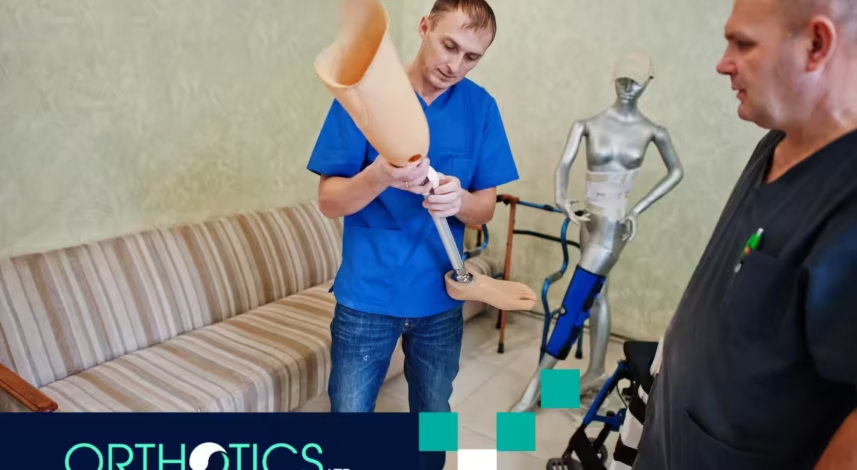
Key Highlights
- Custom prosthetic limbs are tailored to each person’s lifestyle, goals, and physical needs, ensuring optimal comfort and functionality.
- The prosthetist process includes evaluation, casting, design, fitting, and ongoing adjustments for the best outcome.
- Prosthetic fitting is not a one-time event—it involves multiple adjustments to achieve the right balance of comfort and mobility.
- Technology, such as 3D scanning and advanced materials, plays a crucial role in creating personalized prosthetics.
- Emotional support and education are as important as physical adjustments in the customization journey.
- Prosthetists provide long-term care, ensuring the prosthetic adapts as the user’s body and needs change.
The journey to using a prosthetic limb is not just about replacing what was lost—it’s about creating a tool that fits seamlessly into a person’s life. This is where prosthetists, the specialists trained to design, fit, and adjust prosthetic devices, play a critical role.
Through a detailed and highly personalized approach, prosthetists ensure that each individual receives a device tailored to their body, lifestyle, and goals. This process results in custom prosthetic limbs that go far beyond function—they restore independence and enhance quality of life.
In this blog, we’ll explore the prosthetist process, what happens during a prosthetic fitting, and how customization ensures that every prosthetic limb meets the unique needs of its user.
The Prosthetist Process: Step by Step
The journey to a custom prosthetic limb involves several stages. Each step ensures the final prosthesis provides maximum comfort, mobility, and functionality.
1. Initial Evaluation
The process begins with a thorough evaluation of the patient’s physical condition, lifestyle, and goals.
- Medical history and amputation details are reviewed.
- Muscle strength, skin condition, and range of motion are assessed.
- The prosthetist discusses goals—whether walking, sports, or daily activities.
2. Casting and Measurement
Precise measurements are critical for a proper fit.
- Traditional methods use plaster casting to create a mold of the residual limb.
- Modern methods may use 3D scanning for digital accuracy.
- Measurements are used to design the socket, which connects the prosthesis to the body.
3. Designing the Custom Prosthesis
This stage combines medical science and engineering.
- The socket design is based on weight distribution and pressure relief.
- The type of prosthetic knee, foot, or hand is selected according to lifestyle.
- Lightweight, durable materials such as carbon fiber or titanium are chosen.
4. Prosthetic Fitting
The initial fitting involves testing a prototype or temporary prosthesis.
- Users test comfort, stability, and alignment.
- Adjustments are made to reduce pressure points or discomfort.
- The prosthetist ensures the device aligns with natural body movement.
5. Training and Rehabilitation
A prosthetic limb is only effective if the user knows how to use it properly.
- Users work with physical therapists to strengthen muscles and learn gait patterns.
- The prosthetist collaborates with rehabilitation teams for holistic care.
6. Final Adjustment and Delivery
Once the user is comfortable, the final prosthesis is fabricated.
- Cosmetic finishing may be added for a natural look.
- The prosthetist provides detailed instructions for care and maintenance.
7. Ongoing Support
The process does not end with delivery.
- Regular checkups ensure the prosthesis remains effective.
- Adjustments are made as the user’s body changes.
- Emotional and educational support are provided throughout the journey.
Traditional vs. Modern Prosthetist Techniques
| Step of Process | Traditional Method | Modern Method (Technology-Assisted) |
|---|---|---|
| Casting | Plaster molds | 3D scanning for precision |
| Socket Design | Manual shaping | CAD (computer-aided design) |
| Testing Fit | Trial-and-error adjustments | Digital alignment tools |
| Fabrication | Handcrafted with basic materials | Advanced composites, carbon fiber, titanium |
| Training Support | Physical rehab only | Integrated with virtual gait analysis |
Why Custom Prosthetic Limbs Matter
No two people are the same—and no two prosthetic limbs should be either. Customization ensures:
- Comfort: Reduces skin irritation and pressure sores.
- Functionality: Matches the user’s daily activities, from walking to running.
- Confidence: A good fit improves self-image and independence.
- Longevity: Properly designed prosthetics require fewer replacements and adjustments.
The Role of Technology in Custom Prosthetics
Advances in technology have transformed how prosthetists create custom prosthetic limbs.
- 3D Printing: Allows rapid prototyping and cost-effective solutions.
- Microprocessor Components: Provide real-time adjustments for more natural movement.
- Smart Materials: Lightweight yet durable, improving comfort and endurance.
- AI and Robotics: Emerging fields aimed at mimicking natural limb movement.
Emotional and Psychological Support
Adjusting to a prosthetic is not only physical but also emotional. Prosthetists provide:
- Counseling and reassurance during the transition.
- Peer group recommendations for shared experiences.
- Education on realistic expectations and success stories.
This holistic approach makes prosthetists not just technicians but lifelong partners in the rehabilitation journey.
Final Thoughts
Creating custom prosthetic limbs is an art and science that combines technical expertise, medical knowledge, and compassionate care. The prosthetist process ensures that every device is tailored to the individual through careful evaluation, design, and ongoing adjustments. A proper prosthetic fitting makes all the difference in restoring mobility, confidence, and independence.
At Orthotics Ltd., our prosthetists are dedicated to providing personalized prosthetic solutions that adapt to every individual’s unique journey. Through advanced technology, skilled craftsmanship, and long-term support, we help people live life to the fullest. Contact us today!
Frequently Asked Questions
1. How long does the prosthetist process take?
It varies but typically takes several weeks to months, depending on healing, fitting sessions, and adjustments.
2. What happens during a prosthetic fitting?
During a prosthetic fitting, the prosthetist tests comfort, alignment, and stability, making adjustments to ensure proper fit and function.
3. Can custom prosthetic limbs be updated as my needs change?
Yes, prosthetics are adjustable and can be updated with new components as your lifestyle or physical condition changes.
4. Are 3D-printed prosthetics reliable?
Yes, 3D-printed prosthetics are increasingly reliable and cost-effective, though they may not yet replace all traditional options.
5. How often should I visit my prosthetist after receiving a limb?
Regular visits are recommended, especially in the first year, to make necessary adjustments and ensure ongoing comfort.
Sources:
- https://www.physio-pedia.com/Prosthetic_rehabilitation
- https://news.mit.edu/2024/prosthesis-helps-people-with-amputation-walk-naturally-0701
- https://www.aopa.org.au/documents/item/724
- https://pmc.ncbi.nlm.nih.gov/articles/PMC11325936/
