

Debunking Common Myths About Pediatric Prosthetics
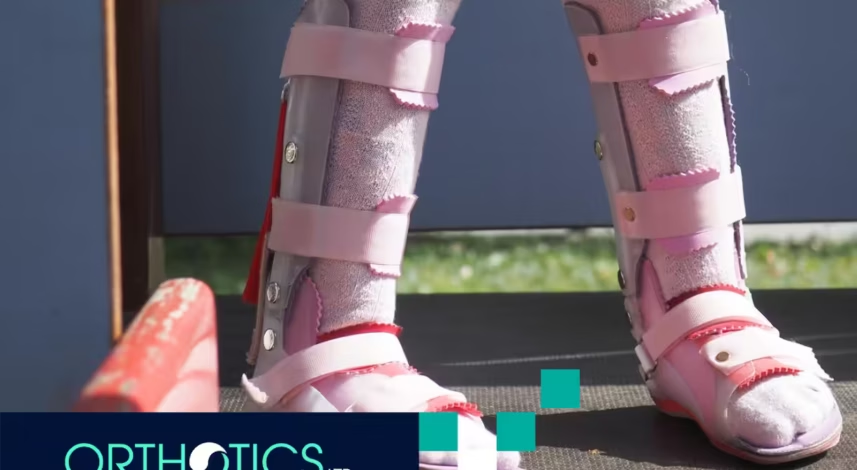
Key Highlights
- Pediatric prosthetics are designed to support growth, development, and independence.
- Children can adapt to prosthetics faster than many adults.
- Prosthetics do not limit childhood activities when properly fitted.
- Early intervention with pediatric prosthetics can improve long-term outcomes.
- Modern pediatric prosthetics are lightweight, customizable, and child-friendly.
When a child needs a prosthetic limb, families are often faced with uncertainty, emotions, and a flood of information—much of it inaccurate. Pediatric prosthetics are surrounded by long-standing myths that can create unnecessary fear or hesitation for parents and caregivers. These misconceptions may delay intervention, affect expectations, or limit a child’s opportunities for independence.
The truth is that pediatric prosthetics have evolved significantly. With advances in technology, materials, and clinical care, children today have access to prosthetic solutions that support healthy physical development, emotional well-being, and active lifestyles.
This article focuses on debunking the most common myths about pediatric prosthetics, replacing misinformation with clear, evidence-based explanations to help families make informed decisions.
What Are Pediatric Prosthetics?
Pediatric prosthetics are artificial limbs designed specifically for children who are born with limb differences or who experience limb loss due to illness, injury, or medical conditions. Unlike adult prosthetics, pediatric devices must accommodate ongoing growth, rapid developmental changes, and varying activity levels.
These prosthetics are customized to:
- Fit a child’s size and anatomy
- Support developmental milestones
- Encourage exploration and play
- Adapt as the child grows
Why Myths About Pediatric Prosthetics Persist
Many myths stem from outdated information, lack of exposure, or assumptions based on adult prosthetic use. Because pediatric prosthetics is a specialized field, families may encounter conflicting advice or misleading narratives online or through word-of-mouth.
Understanding what pediatric prosthetics truly offer can help families move forward with confidence.
Myth #1: Children Are Too Young to Use Prosthetics
Reality: Children can benefit from prosthetics at a very young age.
One of the most common myths about pediatric prosthetics is that children should wait until they are older. In reality, early prosthetic use often supports developmental progress.
Benefits of early intervention include:
- Supporting bilateral movement
- Encouraging balance and coordination
- Promoting natural movement patterns
- Helping children integrate the prosthesis as part of their body image
Prosthetics introduced early are often seen by children as tools rather than obstacles.
Myth #2: Pediatric Prosthetics Will Limit a Child’s Activities
Reality: Properly fitted prosthetics are designed to support activity, not restrict it.
Many parents worry that prosthetics will prevent their child from running, playing, or participating in sports. Modern pediatric prosthetics are built with flexibility and durability in mind.
Children with prosthetics can participate in:
- Sports and physical education
- Playground activities
- Swimming (with appropriate devices)
- Hobbies like biking, climbing, and dancing
Activity-specific prosthetics can further enhance participation.
Myth #3: Prosthetics Are Uncomfortable for Children
Reality: Comfort is a top priority in pediatric prosthetic design.
Children grow quickly, and comfort is essential for consistent prosthetic use. Pediatric prosthetics are made using lightweight materials and customized sockets to minimize pressure points and skin irritation.
Ongoing adjustments ensure:
- Proper fit during growth spurts
- Reduced friction and discomfort
- Improved wear time and tolerance
Discomfort usually indicates the need for an adjustment—not that the prosthetic is unsuitable.
Myth #4: Children Will Outgrow Prosthetics Too Quickly for Them to Be Worth It
Reality: Pediatric prosthetics are designed with growth in mind.
Children indeed outgrow prosthetics more frequently than adults, but that does not make them unnecessary or wasteful. Prosthetic plans account for growth through:
- Modular components
- Adjustable designs
- Regular reassessments
The functional and developmental benefits during each growth stage far outweigh the need for periodic updates.
Myth #5: Prosthetics Will Make a Child Feel “Different”
Reality: Prosthetics often improve confidence and independence.
Parents may worry about social stigma, but many children embrace their prosthetics as part of their identity. When introduced in a supportive environment, prosthetics can:
- Increase independence
- Build self-esteem
- Encourage social participation
- Reduce frustration during tasks
Open conversations and positive reinforcement play a key role in shaping how children view their prosthetics.
Myth #6: Pediatric Prosthetics Are Only for Walking
Reality: Pediatric prosthetics support a wide range of functions.
While lower-limb prosthetics often focus on mobility, upper-limb prosthetics help children with:
- Grasping and holding objects
- Fine motor development
- Self-care tasks
- School-related activities
Some prosthetics are task-specific, while others are designed for everyday use.
Types of Pediatric Prosthetics
| Type of Prosthetic | Purpose | Common Age Range | Key Benefits |
|---|---|---|---|
| Passive Prosthetics | Cosmetic or basic support | Infancy to early childhood | Early body awareness |
| Body-Powered Prosthetics | Functional movement | Toddlers and older | Durable and intuitive |
| Myoelectric Prosthetics | Muscle-controlled | School-age children | Enhanced precision |
| Activity-Specific Prosthetics | Sports or hobbies | Varies | Improved participation |
Each type is selected based on developmental stage, needs, and goals.
Myth #7: Children Won’t Use Their Prosthetics Consistently
Reality: Children often adapt faster than adults.
Children are remarkably adaptable. When prosthetics are introduced in a positive, age-appropriate way, many children quickly learn to use them as part of daily life.
Consistency improves when:
- The prosthetic fits well
- The child is involved in the process
- Use is encouraged through play
- Expectations are realistic and supportive
Myth #8: Pediatric Prosthetics Are “One-Size-Fits-All”
Reality: Pediatric prosthetics are highly customized.
Every child is unique. Pediatric prosthetics are tailored to:
- Limb length and shape
- Activity level
- Developmental stage
- Personal preferences
Customization ensures better comfort, performance, and acceptance.
The Role of the Prosthetic Care Team
Successful pediatric prosthetic use involves a multidisciplinary approach, often including:
- Prosthetists
- Physicians
- Physical or occupational therapists
- Parents and caregivers
This team works together to ensure the prosthetic supports the child’s physical and emotional development.
Emotional Support and Family Involvement
Families play a crucial role in a child’s prosthetic journey. Positive reinforcement, open communication, and patience can make a significant difference in how a child adapts.
Encouraging independence while offering reassurance helps children build resilience and confidence.
How Technology Has Improved Pediatric Prosthetics
Advancements in pediatric prosthetics include:
- Lightweight materials
- Improved socket designs
- Enhanced control systems
- Durable components for active play
These innovations help children move more naturally and comfortably.
Making Informed Decisions About Pediatric Prosthetics
Parents should feel empowered to ask questions and seek guidance. Important considerations include:
- The child’s developmental stage
- Lifestyle and activity level
- Comfort and fit
- Long-term goals
Education helps families move past myths and focus on what truly benefits the child.
Final Thoughts
Debunking myths about pediatric prosthetics is essential for helping children reach their full potential. Modern pediatric prosthetics are not limiting devices—they are tools that support growth, independence, and confidence at every stage of development.
Families seeking knowledgeable, compassionate care and customized pediatric prosthetic solutions can find trusted support through experienced providers like Orthotics Ltd., who understand the unique needs of growing children. Reach out today!
Frequently Asked Questions
1. At what age can a child start using pediatric prosthetics?
Some children can begin using prosthetics as early as infancy, depending on their needs and development.
2. How often do pediatric prosthetics need to be replaced?
Replacement or adjustment schedules vary, but children are typically reassessed every 6–12 months due to growth.
3. Are pediatric prosthetics safe for active play?
Yes. Pediatric prosthetics are designed to withstand daily activity and play when properly fitted.
4. Will my child need therapy with a prosthetic?
Many children benefit from physical or occupational therapy to maximize comfort and function.
5. Can pediatric prosthetics be customized?
Absolutely. Pediatric prosthetics are highly customized to fit each child’s body, lifestyle, and preferences.
Sources:
- https://magazine.medlineplus.gov/article/prosthetics-through-the-ages
- https://www.sciencedirect.com/science/article/pii/S2768276524005856
- https://pmc.ncbi.nlm.nih.gov/articles/PMC4968852/
- https://www.sciencedirect.com/topics/medicine-and-dentistry/myoelectric-control
