

The Difference Between Functional and Accommodative Orthotics
Key Highlights
- “Functional” orthotics are rigid or semi‑rigid devices designed to correct foot biomechanics and control abnormal motion.
- “Accommodative” orthotics are soft, cushioned devices aimed at redistributing pressure, relieving pain, and protecting vulnerable foot tissue.
- The choice between functional and accommodative depends on your foot condition, needs (correction vs comfort), activity level, and footwear.
- Some orthotics combine aspects of both — offering support, motion control, and cushioning (semi‑rigid or mixed designs).
- Knowing the differences helps you and your clinician select the right orthotic to improve comfort, prevent injuries, and support long‑term foot health.
Foot orthotics — custom‑made shoe inserts or foot supports — are widely used to address pain, deformities, imbalances, or gait problems. But not all orthotics are the same. A crucial distinction is between functional and accommodative orthotics. Understanding the difference helps you choose the right orthotic type for your specific condition: whether you need correction and motion control, or cushioning and pressure relief. This post explains both types in detail, their pros and cons, when each is appropriate, and how to make a well-informed decision together with your foot specialist.
What Are Orthotics — and Why They’re Prescribed
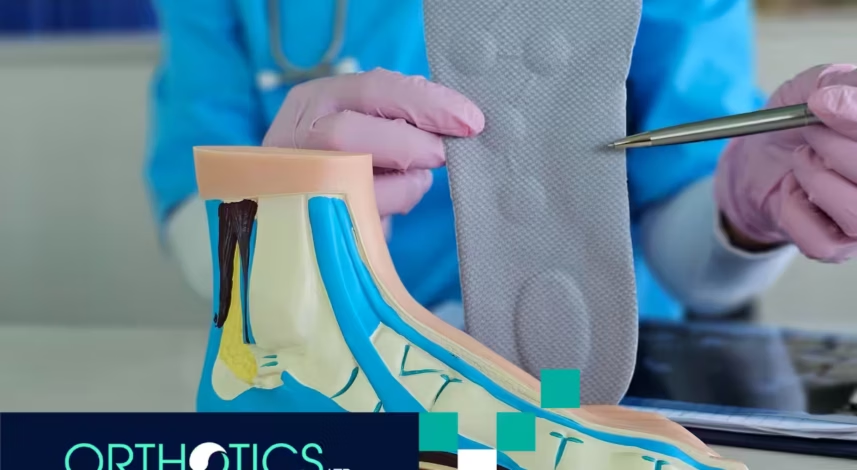
Orthotics are medical devices worn inside shoes (or as part of foot braces) that provide support, alignment, cushioning, or motion control for the foot and lower limb.
They serve many purposes: relieving chronic foot, leg, or back pain; reducing fatigue when standing or walking; accommodating foot deformities (e.g., flat feet, high arches, bunions); supporting recovery after injury; improving gait or posture; and preventing further structural damage.
Custom‑made orthotics are often more effective than over-the-counter insoles because they’re tailored to the exact shape and biomechanics of the user’s foot.
Among custom orthotics, two broad categories emerge: functional and accommodative. Each serves different goals.
Functional Orthotics — What They Are and When They’re Used
Definition & Purpose
- Functional orthotics are made from semi‑rigid or rigid materials (e.g., polypropylene, carbon fiber, hard plastics).
- Their primary aim is to correct abnormal foot motion, control joint mechanics (subtalar, midfoot), and improve biomechanical alignment during standing, walking, or running.
- By stabilizing joints and aligning the foot, they help reduce overpronation, supination, or other dysfunctional movement patterns that may lead to injury or pain.
Common Conditions & Indications
Functional orthotics are often prescribed for:
- Flat feet (fallen arches) / collapsing arches
- High arches, rigid foot posture
- Plantar fasciitis, heel pain, arch pain
- Overuse injuries, tendonitis, shin splints, ankle instability, knee/hip strain, and downstream from foot misalignment
- Biomechanical deformities, gait abnormalities, structural imbalances.
Material & Fit Characteristics
| Feature | Description |
|---|---|
| Material | Semi‑rigid or rigid (plastic, graphite/carbon fiber, molded polypropylene) |
| Thickness / Profile | Generally thin profile, easier to fit into standard shoes |
| Support Level | High — controls motion, stabilizes joints, alters foot mechanics |
| Comfort Initially | May feel firm or stiff at first; less cushioning compared to soft orthotics |
| Durability | Durable, long‑lasting, holds shape well over time |
Advantages
- Provides biomechanical correction and alignment, reducing abnormal stress on the foot, ankle, knee, and even hips.
- Helps prevent overuse injuries and supports people with active lifestyles or those wanting structural foot correction.
- Fits standard footwear easily because of its slimmer profile.
- Long‑lasting and maintains support over time.
Limitations / Considerations
- Less cushioning — may not be ideal if foot tissue is sensitive, or for people requiring pressure redistribution (e.g., neuropathy).
- May feel rigid at first; an adaptation period may be needed.
- Not always suitable for severe deformities or for people whose main need is comfort rather than motion correction.
Accommodative Orthotics: What They Are and When They’re Used
Definition & Purpose
- Accommodative orthotics are made of soft, flexible, and cushioned materials (foam, cork, rubber, gel, soft plastics).
- Their main aim is to redistribute pressure, cushion foot structures, provide padding, and relieve pain — especially where tissue is vulnerable, or in cases of sores, calluses, ulcers, or structural deformities that make rigid correction unsuitable.
- Instead of altering foot biomechanics significantly, they focus on comfort, protection, and reducing load on painful or compromised foot areas.
Common Conditions & Indications
Accommodative orthotics are typically recommended for:
- Diabetic foot conditions — neuropathy, ulcers, risk of foot sores, or poor circulation
- Painful calluses, corns, or plantar surface sores
- Arthritis, rigid joints, and age‑related degenerative foot conditions
- People requiring cushioning and pressure redistribution rather than motion correction — e.g., older adults, those with fragile skin or poor tissue health
Material & Fit Characteristics
| Feature | Description |
|---|---|
| Material | Soft, cushioned materials like foam, cork, rubber, gel, soft plastics |
| Thickness / Profile | Often bulkier; may require shoes with more depth or room to fit comfortably |
| Support Level | Lower control — minimal biomechanical correction, focuses on comfort and pressure relief |
| Comfort Initially | Generally comfortable from first wear due to padding and softness |
| Durability | Less durable — soft materials compress over time and may need more frequent replacement or adjustment |
Advantages
- Excellent for cushioning, pressure redistribution, and protection of vulnerable foot tissue.
- Ideal for people with diabetes, ulcers, calluses, or those needing comfort over biomechanical correction.
- More forgiving to wear — usually comfortable immediately.
- Useful in therapeutic, protective, or palliative contexts where joint correction might be contraindicated.
Limitations / Considerations
- Bulkier — may not fit standard shoes easily; may require orthopedic or deeper footwear.
- Less effective for correcting gait abnormalities or structural misalignment.
- Shorter lifespan — padding compresses, material degrades faster, may need frequent adjustment or replacement.
Semi‑Rigid / Hybrid Orthotics: A Middle Ground
In practice, many orthotic designs fall somewhere between purely functional and purely accommodative. These semi-rigid (hybrid) orthotics combine aspects of both: a supportive shell for motion control, with a cushioned top layer for comfort and pressure relief.
These hybrid orthotics are often prescribed when:
- The user needs some biomechanical correction, but also has sensitive tissue or requires cushioning.
- The activity level varies — e.g., regular walking but occasional standing for long hours, or light sports.
- There’s a need for a balance between comfort, function, and durability.
They represent a practical compromise for many daily‑use scenarios.
How to Choose Between Functional and Accommodative Orthotics
Choosing the right orthotic depends on several factors:
| Consideration | When Functional Orthotics Are Best | When Accommodative Orthotics Are Best |
|---|---|---|
| Primary Goal | Correct foot motion, improve biomechanics, stabilize joints, treat structural issues | Cushion, relieve pressure, redistribute load, protect tissue |
| Foot Condition | Flat feet, fallen arches, overpronation/supination, biomechanical deformities, chronic pain from abnormal motion | Diabetes-related foot problems, ulcers, calluses, arthritis, sensitive or fragile skin |
| Activity Level | Moderate to high — walking, running, sports, daily mobility; need support and motion control | Low to moderate activity; need comfort, pressure relief, protection rather than performance |
| Footwear Compatibility | Standard shoe fit — slim profile, easier shoe integration | Requires deeper or orthopedic shoes — may not fit in thin, tight shoes |
| Durability Need | Long‑term, consistent support over the years | Comfort and protection prioritized; may require periodic replacement |
| User Comfort / Sensitivity | Less concern about initial firmness; okay with adjustment period | Sensitive to pressure, sores, cushioning is important from the first wear |
It’s often helpful to consult a podiatrist or orthotist, who can assess gait, foot structure, activity level, and footwear to recommend the ideal orthotic type.
Real‑World Scenarios: When Each Orthotic Type Shines
- Active adult with flat feet + plantar fasciitis: A functional orthotic helps correct overpronation, realign foot structure, reduce arch strain — improving gait, reducing pain, and preventing further damage.
- Diabetic patient with risk of foot ulcers or neuropathy: An accommodative orthotic cushions pressure points, redistributes weight, and reduces risk of calluses or ulcers — prioritizing tissue protection over motion correction.
- Older adult with arthritis and foot pain while standing: An accommodative or semi‑rigid orthotic offers soft cushioning and pressure relief for comfort during daily activities.
- Athlete or regular runner with overuse injuries: A functional (or semi‑rigid) orthotic helps stabilize joints, control abnormal motion, and prevent repetitive stress injuries.
- Someone with mixed needs (e.g., structural issues + sensitive skin): A hybrid/semi‑rigid orthotic — combining motion control and cushioning — offers a balanced solution.
Key Takeaways: What You Should Know
- Orthotics are not one‑size-fits-all — the classification (functional vs accommodative) reflects very different aims and design philosophies.
- Functional orthotics = motion control, structural correction, stability; Accommodative orthotics = cushioning, pressure redistribution, comfort.
- The right choice depends on foot condition, activity level, footwear, tissue sensitivity, and what you want the orthotic to do.
- In many cases, semi‑rigid or hybrid orthotics offer a balanced, flexible solution that caters to both comfort and control.
- Working with a qualified foot-care professional is essential — custom orthotics tailored to your biomechanics and lifestyle give the best results.
Functional and accommodative orthotics serve distinct, important roles in foot care. One focuses on correcting motion and realigning biomechanics; the other prioritizes comfort, pressure relief, and protection for vulnerable tissue. Your choice should reflect your foot health needs, activity level, footwear, and overall lifestyle. In many cases, a hybrid solution may offer the best balance.
For a proper assessment and custom fit tailored to your foot structure, gait, and daily life, consider professional fitting and consultation. Your orthotic should help you walk, stand, and move comfortably and safely for years. For expert fitting and personalized solutions, Orthotics Ltd. can help you find the perfect fit. Contact us today!
Frequently Asked Questions
1. Can I switch from accommodative to functional orthotics (or vice versa)?
Yes, if your foot health needs change. For example, if cushioning/protection was needed first (e.g., ulcer prevention), but later you want biomechanical correction or improved gait, a functional or semi‑rigid orthotic may be appropriate. Always have a professional reassessment before switching.
2. Are functional orthotics painful or uncomfortable at first?
They may feel firmer or more rigid initially compared to soft, cushioned orthotics. Some users need a short adaptation period. This is normal; however, if pain persists or you feel new pressure points, consult your orthotist.
3. Do accommodative orthotics help with gait or posture problems?
Not usually. Accommodative orthotics prioritize cushioning and pressure relief; they are not designed to significantly correct abnormal biomechanics or alignment. For gait correction or structural issues, functional or semi‑rigid orthotics are more appropriate.
4. How long do orthotics last?
It depends on use, material, and maintenance. Functional orthotics (rigid/semi‑rigid) tend to last longer because they hold their shape. Accommodative orthotics (soft materials) compress faster and may require more frequent replacement or adjustment.
5. Can one pair of orthotics do everything — correction, cushioning, comfort?
Sometimes, semi‑rigid (hybrid) orthotics try to combine support, motion control, and cushioning, offering a compromise between functional and accommodative designs. Whether that works depends on your foot condition and lifestyle. It’s best to consult a clinician when customizing.
Sources:
- https://my.clevelandclinic.org/health/treatments/orthotics
- https://pmc.ncbi.nlm.nih.gov/articles/PMC10659571/
- https://pmc.ncbi.nlm.nih.gov/articles/PMC9693734/
- https://pubmed.ncbi.nlm.nih.gov/10578252/
