

Physical Therapy After Prosthetic Limb: Key Role & Benefits
Key Highlights
- Physical therapy for a prosthetic limb is essential to restore strength, balance, and safe gait mechanics.
- Physical therapy for prosthetics helps integrate the prosthesis into functional movement and prevents compensatory injuries.
- Prosthetic physical therapy guides adaptation, reduces fall risk, and improves mobility and confidence.
- A structured rehab program includes phases: pre-prosthetic, gait training, strengthening, functional training, and community reintegration.
- Success depends on a multidisciplinary team, consistent follow-up, and individualized goal setting.
Receiving a prosthetic limb is a transformative event. It opens new possibilities for mobility, independence, and quality of life. But the fitting of a prosthesis is just the beginning—true functional recovery hinges on targeted physical therapy for prosthetic limb use. Without structured rehabilitation, many prosthesis users face difficulties such as poor gait mechanics, compensatory injuries, balance deficits, and limited participation in daily life.
In this article, we’ll explore the importance of physical therapy for prosthetics: what it entails, phases, goals, evidence, challenges, and practical considerations. Whether you are a clinician, prosthesis user, or caregiver, understanding the role of prosthetic physical therapy is key to maximizing outcomes.
Why Physical Therapy Is Important After Prosthetic Fitting
Here are the primary reasons why rehabilitation is crucial once someone receives a prosthetic limb:
- Restore Strength & Conditioning: After limb loss, muscular atrophy, cardiovascular deconditioning, and asymmetry are common. Therapy strengthens residual muscles, the intact limb, and the core, enhancing endurance and stability.
- Re-train Gait Mechanics: A prosthetic limb changes the biomechanics of walking. Therapy teaches alignment, weight shift, timing, limb clearance, and safe foot placement to promote efficient gait.
- Prevent and Manage Compensatory Injuries: Without proper technique, users often overload joints (hips, spine, intact limb) and soft tissues, leading to overuse injuries. Therapy fosters symmetrical movement and reduces long-term strain.
- Improve Balance & Fall Risk: The loss of sensory feedback and altered limb dynamics increase fall risk. Therapy works on static and dynamic balance, proprioception, and reactive control.
- Enhance Prosthesis Integration & Comfort: Therapy helps adjust to socket fit, alignment changes, and functional use. It also addresses issues like socket pain, skin breakdown, and discomfort.
- Promote Functional Independence: Beyond walking, a comprehensive therapy program trains users in stairs, ramps, uneven surfaces, transfers, and community ambulation.
- Boost Confidence and Psychological Adaptation: Learning to trust a new limb can be emotionally challenging. With guided progression and feedback, users gain confidence and reduce fear of falling or injury.
- Shorten Rehab Time & Improve Outcomes: Evidence suggests that using a training prosthesis during rehab is associated with shorter inpatient stays. Similarly, people undergoing physical therapy tend to have better weight-bearing, mobility, and endurance with their prostheses.
Without robust therapy, many prosthetic users achieve only partial function or face abandonment of their prosthesis altogether.
Evidence & Research Supporting Prosthetic Physical Therapy
While prosthetic rehabilitation has become standard of care, research data help clarify how and why therapy is effective:
- A study on lower-limb amputees found that those who used a training prosthesis during rehabilitation had significantly shorter hospital stays than those who did not.
- In an evidence-based review, physical therapy was associated with improved prosthetic weight-bearing, mobility, musculoskeletal endurance, and functional capacity.
- A systematic review of lower-limb prostheses emphasized that prosthetic design and rehabilitation together influence quality of life and biomechanical performance.
- In amputation rehabilitation trials, structured exercise and rehabilitation programs over 8 weeks resulted in measurable functional gains compared to waitlist controls.
- Early rehabilitation after prosthesis receipt is linked to better mobility outcomes and lower overall morbidity.
These findings reinforce that physical therapy for prosthetic limb use is not optional—it is integral to achieving the full benefits of the prosthesis.
Phases of Prosthetic Rehabilitation & What Happens in Each
A standard therapy program for prosthetic users is often structured into multiple phases. Below is a typical progression:
| Phase | Focus / Goals | Key Interventions |
|---|---|---|
| Pre-prosthetic / Pre-gait | Prepare limb and body for prosthesis | Stump shaping, desensitization, ROM, core and hip strength, cardiovascular fitness |
| Initial Gait Training | Basic ambulation with a prosthesis | Weight shifting, step initiation, stance control, limb clearance, balance drills |
| Progressive Gait & Functional Training | Expand mobility | Longer walks, varying terrains, step/curb negotiation, dual-task walking |
| Advanced and Community Integration | Real-world tasks | Stair climbing, obstacle avoidance, uneven surfaces, and agility tasks |
| Maintenance & Long-Term Conditioning | Sustained function | Strength/endurance training, periodic reassessment, and addressing complications |
Each phase typically overlaps; progression is individualized based on goals, health status, and device proficiency.
Key Components of Prosthetic Physical Therapy
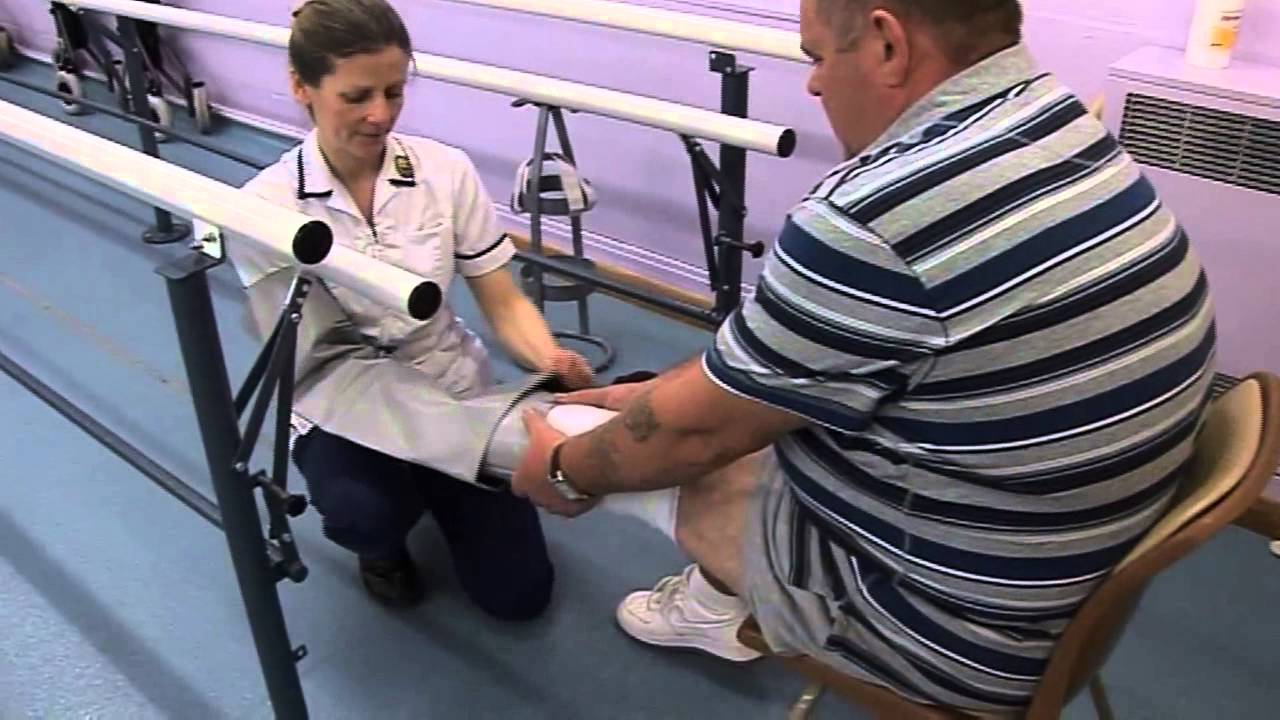
To achieve success, a prosthetic physical therapy program generally includes:
1. Assessment & Baseline Testing
- Limb and residual limb examination (skin, ROM, muscle strength)
- Cardiovascular and endurance assessment
- Balance and proprioceptive testing
- Gait analysis (video, sensor systems)
- Functional goal-setting and patient expectations
2. Stump Preparation & Desensitization
- Massage, tapping, soft-tissue mobilization
- Scar mobilization and skin care
- Sensory desensitization protocols
3. Range of Motion & Joint Mobility
- Stretching tight muscles (hip flexors, hamstrings, hip abductors)
- Joint mobilizations and flexibility exercises
4. Strength and Endurance Training
- Core, hip, knee, and residual limb strengthening
- Closed-chain and open-chain exercises
- Cardiovascular conditioning (cycling, swimming, upper-body ergometers)
5. Balance, Proprioception & Neuromuscular Control
- Static and dynamic balance drills
- Perturbation training, reactive stepping
- Use of assistive devices initially, advancing to unassisted
6. Gait Training & Kinematic Retraining
- Weight shifting drills
- Step initiation, mid-stance control, and toe-off training
- Mirror, video, and instrumented feedback
- Gradual progression to varied terrains and speeds
7. Functional Training & Task-Specific Practice
- Stairs, ramps, curbs, surfaces (grass, gravel)
- Transfers (sit-to-stand, chair, car)
- Dual-task walking (cognitive + ambulation)
- Community ambulation training
8. Education & Self-Management
- Skin inspection, hygiene, sock or liner management
- Pain management, handling socket discomfort
- Fall prevention strategies
- Home exercises and adaptive strategies
9. Ongoing Monitoring & Adjustment
- Periodic reassessments (every 3–6 months)
- Prosthesis alignment adjustments with the prosthetist
- Identifying and addressing overuse or compensation issues
A strong therapy program is collaborative: therapists, prosthetists, patients, and caregivers all communicate to adapt interventions over time.
Challenges & Strategies in Prosthetic Physical Therapy
Rehabilitation post-amputation and prosthesis fitting comes with unique challenges. Understanding them helps in planning realistic and effective therapy.
Common Challenges
- Pain in the residual limb, phantom limb pain, or hypersensitivity
- Poor socket fit or discomfort causing gait deviations
- Muscle weakness or deconditioning from the pre-amputation period
- Imbalance and fear of falling
- Skin breakdown or pressure sores from the prosthetic interface
- Psychological barriers, fear, or low motivation
- Comorbidities (cardiovascular disease, diabetes, joint disease)
- Prosthesis abandonment if the user lacks confidence or progress
Mitigation Strategies
- Start gently—gradual progression and cautious loading
- Close coordination between therapist and prosthetist—adjust socket alignment based on gait feedback
- Use assistive devices initially and wean as strength and balance improve
- Incorporate pain-modulating strategies (e.g., desensitization, mirror therapy)
- Set small, attainable milestones to build confidence
- Manage comorbidities concurrently (nutrition, medical follow-up)
- Regular reviews and user feedback loops to detect gait deviations or compensations
- Consider adjunctive modalities (e.g,. neuromuscular electrical stimulation) under supervision
By anticipating hurdles, rehabilitation programs can stay proactive and responsive.
Real-Life Impact: Stories & Outcomes
Though every user’s journey is unique, here are some illustrative benefits seen through physical therapy:
- A person fitted with a training prosthesis during rehab had a shorter hospital stay and faster return to mobility than similar individuals without a training prosthesis.
- In controlled studies, exercise-based amputee rehabilitation improved walking distance, balance scores, and self-reported quality of life compared to baseline.
- Patients receiving structured rehab show higher function, better prosthetic tolerance, and fewer secondary musculoskeletal complaints.
- Outpatient therapy helps users transition from assisted walking to independent community ambulation, boosting overall well-being and self-esteem.
These outcomes underscore how physical therapy for prosthetics converts a passive device into a functional, trusted limb.
Tips for Maximizing Rehabilitation Success
To get the most from prosthetic physical therapy, consider these practical suggestions:
- Start rehab early: The sooner therapy begins after prosthesis fitting, the better—early rehab correlates with better mobility outcomes.
- Be consistent and persistent: Rehabilitation is a process, not a quick fix. Regular sessions and home exercise adherence matter more than occasional bursts.
- Set realistic goals: Work with your therapist to define short-term and long-term goals (e.g., walking 100m, climbing stairs, carrying groceries).
- Communicate openly: Share discomfort, socket issues, pain, or fear. Honest feedback helps therapists adjust plans and prosthetists refine the device.
- Track progress with objective measures: Use gait metrics, timed walking tests, balance scores, photos/video—these data help fine-tune therapy and demonstrate gains.
- Address the whole body: Focus not only on the residual limb but also on core stability, hip strength, posture, and the uninvolved limb to prevent overuse.
- Integrate real-world practice: Simulate daily tasks (ramps, stairs, shopping) within therapy; practice outside the clinic under supervision.
- Maintain flexibility: Be open to modifications—prosthesis alignment, socket changes, progression or regression depending on comfort and adaptation.
- Monitor for signs of overuse or complications: Joint pain, back pain, skin breakdown, gait asymmetry—address early to prevent chronic issues.
- Stay motivated & psychologically supported: Celebrate small wins, involve peer support, use mental imagery, and maintain a positive mindset.
Final Thoughts
- Physical therapy for prosthetic limb use is a cornerstone of successful prosthetic rehabilitation.
- Physical therapy for prosthetics fosters strength, balance, gait re-training, injury prevention, and functional independence.
- Prosthetic physical therapy programs follow structured phases from stump prep through community integration, combining strength, balance, gait, and functional training.
- Evidence strongly supports the role of therapy in reducing rehab time and enhancing mobility.
- Challenges like pain, socket issues, and psychology must be managed proactively.
- Success depends on user engagement, therapist-prosthetist coordination, and individualized progression.
If you or a loved one is about to start or is already using a prosthetic limb, engaging in targeted and expert physical therapy for prosthetics will dramatically influence outcomes. For professional guidance, tailored rehab programs, and seamless collaboration with the prosthesis team, reach out to Orthotics Ltd. Our specialists in prosthetics and orthotics can support your rehabilitation journey from fitting to confident mobility. Reach out today!
Frequently Asked Questions
1. How long does physical therapy typically last after getting a prosthetic limb?
Duration varies depending on the individual’s health, amputation level, and goals. Typically, structured therapy spans from several months to over a year. Maintenance exercises often continue lifelong.
2. Can I walk normally again with just a prosthesis, without therapy?
While possible, many users develop compensatory patterns, decreased efficiency, pain, or secondary injuries. Therapy ensures safer, more efficient, and more sustainable function.
3. At what point should therapy begin—before or after prosthesis fitting?
Therapy should begin even before prosthesis fitting (pre-prosthetic phase) to prepare strength, flexibility, and conditioning. After fitting, gait and functional training commence.
4. Will therapy help with phantom limb pain or residual limb discomfort?
Yes, therapy includes desensitization, stretch, mirror therapy, and other modalities to help manage phantom pain and mitigate residual limb discomfort.
5. How often should I be evaluated or reassessed during rehabilitation?
Reassessments every 3–6 months are common, with adjustments to therapy and prosthetic alignment made based on progress, comfort, and evolving goals.
Sources:
- https://www.physio-pedia.com/Prosthetic_rehabilitation
- https://pmc.ncbi.nlm.nih.gov/articles/PMC6664837/
- https://pmc.ncbi.nlm.nih.gov/articles/PMC10931137/
- https://academic.oup.com/ptj/article/100/5/773/5707560
- https://jneuroengrehab.biomedcentral.com/articles/10.1186/s12984-023-01128-5
- https://www.hopkinsmedicine.org/physical-medicine-rehabilitation/specialty-areas/limb-loss-rehab
- https://pmc.ncbi.nlm.nih.gov/articles/PMC8865619/
