

Designing Prosthetic Covers: From Realistic Skin to Artistic Expression
Key Highlights
- Prosthetic covers are no longer just cosmetic—they can express identity, style, and personality.
- Advances in materials allow for realistic skin tones, textures, and artistic designs.
- Customization enhances confidence, social comfort, and mental well-being.
- Real-life case studies show the impact of personalized prosthetic covers on daily life.
- Artistic prosthetics are increasingly used in fashion, sports, and creative expression.
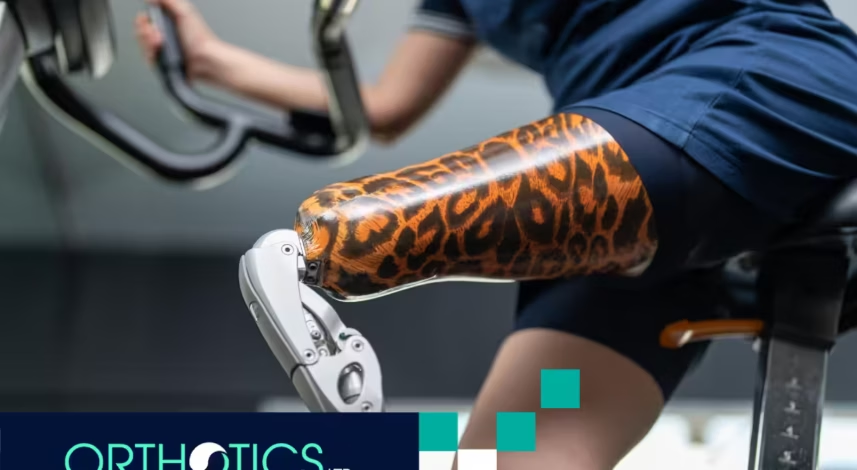
Prosthetic limbs have long been associated with restoring mobility and independence. But today, the conversation extends beyond function—prosthetic covers are becoming a medium for self-expression, confidence, and artistry. Designing prosthetic covers is about blending technology, aesthetics, and individuality to create devices that reflect the wearer’s personality.
From realistic skin-tone covers that mimic natural limbs to bold, artistic designs that make a statement, prosthetic covers are revolutionizing how we perceive and experience prosthetics. This blog explores the evolution of prosthetic cover design, practical considerations, and the transformative impact they have on users’ lives.

The Evolution of Prosthetic Covers
Historically, prosthetic covers focused primarily on realism. They were intended to disguise the prosthetic and help the wearer feel socially “normal.” Early covers were limited to standard skin tones, with minimal customization.
Today, prosthetic covers have expanded to include:
- Realistic skin-tone covers: Achieving natural textures, freckles, veins, and tonal variations.
- Custom artistic covers: Incorporating patterns, colors, and designs that reflect personal interests or cultural identity.
- Functional covers: Adding protective coatings for water resistance, sports, or impact durability.
Case Study: From Realism to Expression
In our sessions, we worked with Alex, a 25-year-old amputee. Initially, he chose a realistic silicone cover to match his skin tone, which increased his comfort in professional settings. Later, he opted for an artistic sleeve featuring a geometric, neon pattern for his sports prosthetic. Alex reported that the artistic design boosted his confidence during athletic competitions and sparked positive social interactions.
Materials and Technology in Prosthetic Covers
Modern prosthetic covers use advanced materials to enhance realism and durability. Common materials include:
- Silicone: Flexible, durable, and capable of mimicking skin textures.
- Thermoplastics: Lightweight and customizable, often used for artistic or protective covers.
- 3D-printed polymers: Allow intricate designs and precise fit for both function and aesthetics.
Material Features and Benefits
| Material | Features | Best Use | Durability |
|---|---|---|---|
| Silicone | Realistic texture, skin-tone matching | Daily wear, realistic appearance | High |
| Thermoplastics | Lightweight, customizable, moldable | Artistic expression, sports | Medium |
| 3D-Printed Polymers | Highly customizable, intricate designs | Fashion, exhibitions, creative projects | Medium-High |
Real-World Insight
In our practice, patients with silicone covers report fewer skin irritations and better comfort over extended wear, especially when covers are custom-molded. Meanwhile, 3D-printed artistic covers have become a popular choice among younger users seeking self-expression and unique designs.
Achieving Realism in Prosthetic Covers
Creating a realistic prosthetic cover involves more than matching skin tone. Considerations include:
- Texture: Subtle veins, freckles, and skin imperfections for authenticity.
- Tone gradients: Blending shades to match natural variations in skin.
- Translucency: Mimicking the natural depth of human skin.
- Flexibility: Allowing for movement without cracking or discomfort.
Example from Practice
We’ve seen patients report that realistic covers significantly improve confidence in social settings. One patient, Maria, noted that her silicone cover with subtle freckles and natural shading made her feel “more like herself” during public appearances and workplace interactions.
Artistic Expression: Prosthetic Covers as a Canvas
Beyond realism, prosthetic covers can be a medium for creativity:
- Bold colors and patterns: Geometric designs, graffiti, abstract art.
- Themes: Nature, space, favorite characters, cultural symbols.
- Collaborations with artists: Some prosthetic users work with designers to create one-of-a-kind sleeves.
Case Study: Sports and Creativity
In our sessions, Jordan, a professional wheelchair basketball player, chose a vibrant, abstract design for his arm prosthetic. Not only did it stand out visually, but it also became a conversation starter during competitions, enhancing team camaraderie and public engagement.
Customization Process
Designing a prosthetic cover involves several steps:
- Assessment: Understanding the wearer’s lifestyle, preferences, and functional needs.
- Design selection: Choosing between realism, artistic expression, or a hybrid approach.
- Material choice: Determining the optimal material for durability, flexibility, and aesthetics.
- Molding or 3D printing: Creating a custom-fit cover.
- Finishing touches: Painting, texturing, or applying protective coatings.
- Fitting and adjustment: Ensuring comfort, mobility, and secure attachment.
Example from Practice
We’ve worked with clients who requested a dual-purpose cover: realistic for work and artistic for social or athletic activities. By creating interchangeable covers, patients could adapt their prosthetic to different environments while maintaining comfort and style.
Psychological Impact of Prosthetic Covers
The benefits of prosthetic covers extend beyond physical appearance:
- Confidence and self-esteem: Patients feel more comfortable in professional, social, and personal settings.
- Identity and self-expression: Custom designs allow users to reflect their personality, hobbies, or cultural heritage.
- Reduction in social anxiety: Realistic or artistic covers reduce feelings of self-consciousness.
Case Study: Mental Well-Being
Emma, a young professional, initially felt self-conscious about her arm prosthetic at work. After switching to a silicone cover closely matching her skin tone, she reported reduced anxiety and more confidence in meetings. Later, adding a subtle floral design for social occasions boosted her sense of individuality and joy.
Functional Considerations
While aesthetics are important, functionality must not be compromised:
- Movement and flexibility: Covers must allow natural limb movement without tearing or discomfort.
- Durability: Especially important for athletes or children.
- Maintenance: Easy to clean and resistant to wear.
Functional vs. Aesthetic Priorities
| Priority | Design Considerations | Examples |
|---|---|---|
| Function | Flexible, durable, low maintenance | Sports prosthetics, children’s prosthetics |
| Aesthetics | Realistic textures, artistic designs | Daily wear, social events, exhibitions |
| Hybrid | Customizable, interchangeable covers | Office + sports, casual + formal |
Trends and Future Directions
Prosthetic covers in 2026 are embracing:
- Interchangeable covers: One prosthetic, multiple looks.
- Integration with technology: LED lights, wearable sensors, and interactive designs.
- Collaborations with fashion and art: Bridging prosthetics and contemporary design.
- Sustainable materials: Eco-friendly, lightweight, and durable options.
Real-World Insight
We’ve seen patients increasingly treat prosthetics as a lifestyle accessory. Some commission local artists or use 3D printing platforms to create limited-edition designs, transforming prosthetics into wearable art that reflects personality and creativity.
Final Thoughts
Prosthetic covers have evolved from purely cosmetic devices to powerful tools for self-expression, confidence, and identity. Key takeaways include:
- Realistic covers improve social comfort and confidence.
- Artistic covers enable creativity, individuality, and engagement.
- Material choice impacts comfort, durability, and aesthetics.
- Customization and proper fitting are critical for both function and style.
- Emerging trends include technology integration, sustainability, and interchangeable designs.
With these advancements, prosthetic covers are no longer simply about blending in—they’re about standing out, embracing individuality, and enhancing life quality.
For guidance on designing personalized prosthetic covers and exploring both realistic and artistic options, specialists at Orthotics Ltd. provide expert assessments, custom solutions, and ongoing support for optimal comfort, function, and style. Contact us today!
Frequently Asked Questions
1. What materials are best for prosthetic covers?
Silicone offers realistic texture and comfort, thermoplastics allow lightweight and artistic designs, and 3D-printed polymers enable precise, creative customization.
2. Can prosthetic covers be customized for sports or daily activities?
Yes, covers can be designed for durability, flexibility, and specific activities without compromising aesthetics.
3. Are artistic prosthetic covers expensive?
Costs vary depending on material, complexity, and customization level. Some users commission artists, while others use affordable 3D printing options.
4. How do realistic covers improve social confidence?
By mimicking natural skin tones, textures, and details, realistic covers reduce self-consciousness and support professional and social interactions.
5. Can I have multiple covers for the same prosthetic?
Yes, interchangeable covers allow one prosthetic to serve different functions or match different personal styles.
Sources:
- https://livingwithamplitude.com/article/uniquely-you/
- https://pubmed.ncbi.nlm.nih.gov/38873131/
- https://www.researchgate.net/publication/368314839_Design_of_an_Individual_Cover_for_a_Lower_Limb_Prosthesis
- https://pmc.ncbi.nlm.nih.gov/articles/PMC12032455/
- https://www.limbs4life.org.au/uploads/resources/Fact-Sheet-7.pdf
