
Adapting Prosthetic Sockets for Different Activity Levels
Key Highlights
- Prosthetic socket fit and comfort are essential for all activity levels, from daily walking to high-impact sports.
- Socket adjustments, liners, and suspension systems can be tailored to match different activity demands.
- Case studies show that adaptive socket strategies reduce discomfort, improve mobility, and prevent skin issues.
- Modern technology, including 3D scanning and dynamic materials, supports personalized prosthetic socket adaptation.
- Understanding activity-based socket adjustments empowers prosthetic users to optimize performance and comfort.
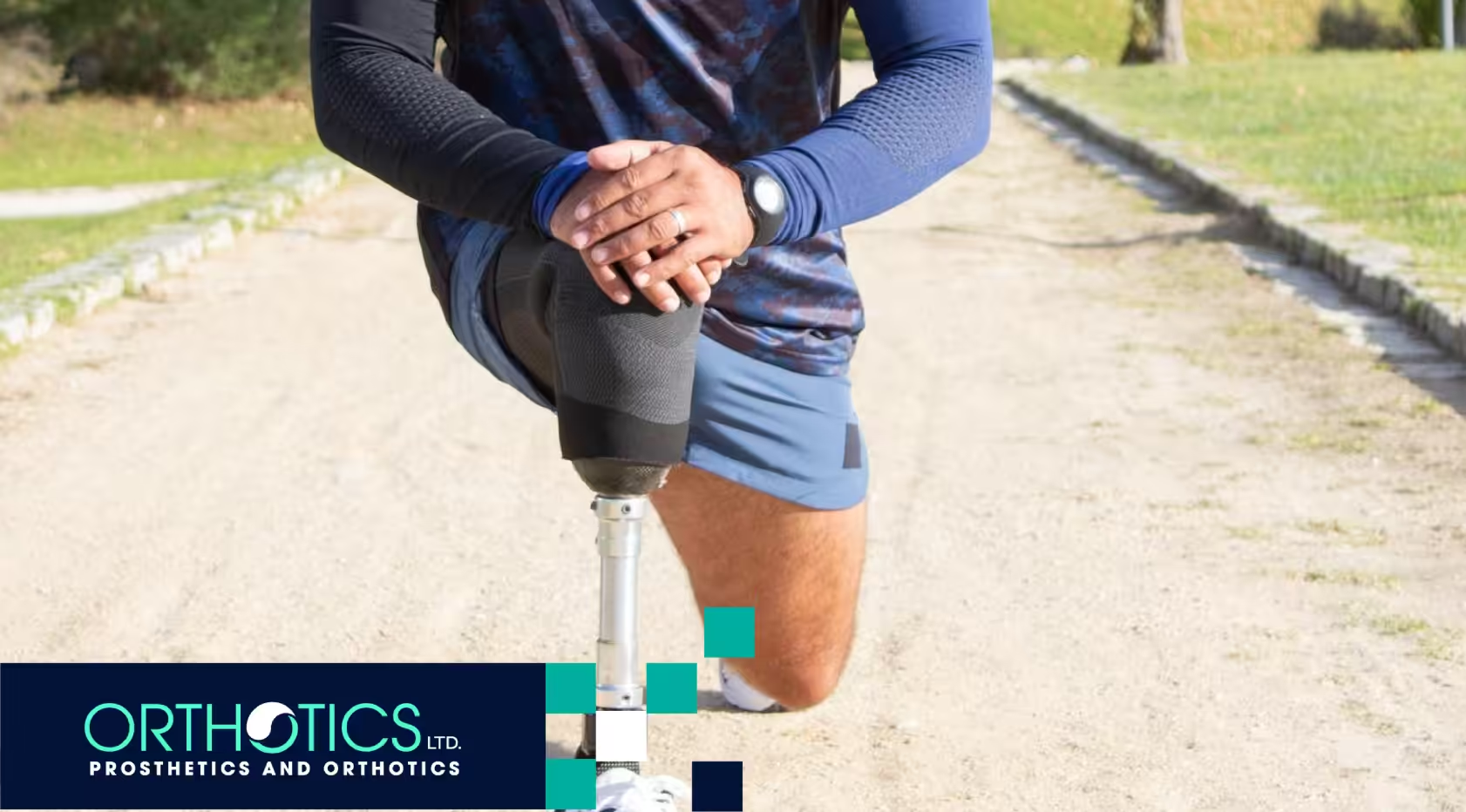
A prosthetic socket serves as the interface between a residual limb and the prosthetic device, making it one of the most critical components for comfort, mobility, and overall function. Adapting prosthetic sockets for varying activity levels, whether daily activities, occupational tasks, or sports, requires a deep understanding of biomechanics, material science, and patient-specific needs. This guide explores strategies, real-world examples, and best practices to help prosthetic users achieve optimal comfort and performance across all activity levels.
Understanding Prosthetic Socket Function
The socket distributes forces from the prosthesis to the residual limb while maintaining stability and alignment. Poorly fitted sockets can lead to discomfort, skin breakdown, and reduced mobility. Activity level is a key factor in determining socket design and adjustment.
Key Socket Components:
- Liners: Provide cushioning and protect skin. Materials vary depending on activity intensity.
- Suspension Systems: Secure the prosthesis to the limb; examples include pin-lock, vacuum, and suction systems.
- Socket Shape: Must accommodate residual limb anatomy while providing sufficient load distribution.
Case Example: In our sessions, we observed that users with moderate activity levels benefited from gel liners combined with suction suspension, improving comfort during daily walking and light exercise.
Low-Impact Activity Adaptations
For daily activities such as walking, light household chores, or office work, prosthetic sockets need to balance stability and comfort.
Key Considerations:
- Use softer liners to reduce pressure points.
- Prioritize a socket fit that accommodates slight limb volume changes throughout the day.
- Ensure proper alignment for energy-efficient gait.
Case Example: A patient transitioning from a hospital setting to daily walking reported reduced skin irritation after switching from a rigid thermoplastic socket to a semi-flexible polymer socket. This adaptation allowed her to comfortably walk around her home and perform light tasks.
Moderate-Impact Activity Adaptations
Moderate activities, including jogging, hiking, or active work environments, place higher demands on prosthetic sockets.
Strategies:
- Increase suspension security to prevent pistoning (vertical movement within the socket).
- Consider dynamic liners that absorb impact forces.
- Adjust socket contours to accommodate increased muscle engagement.
Insight: Recommendations align with research, demonstrating that dynamic socket liners reduce peak pressure points during moderate activity.
Example from Practice: We’ve seen patients using adaptive liners and reinforced socket walls maintain mobility for hiking trips without experiencing skin breakdown or socket instability.
High-Impact and Athletic Activity Adaptations
High-impact activities, such as running, basketball, or weightlifting, demand advanced socket adaptations.
Key Adjustments:
- Use carbon-fiber or composite sockets to provide lightweight strength.
- Incorporate specialized liners for high shear protection.
- Optimize suspension systems, such as elevated vacuum, to minimize residual limb movement.
Case Study: A competitive runner with a below-knee prosthesis reported improved performance after transitioning to a carbon-fiber socket with vacuum suspension. The adjustment allowed for better energy return and reduced residual limb fatigue during long runs.
Material Considerations for Activity-Based Adaptations
The choice of materials significantly affects socket performance across activity levels:
| Activity Level | Recommended Socket Materials | Rationale | Real-World Application |
|---|---|---|---|
| Low | Thermoplastic, semi-flexible polymers | Comfort, daily use | Patients performing household tasks and office work |
| Moderate | Dynamic polymer or reinforced gel liners | Impact absorption, stability | Hiking or light jogging |
| High | Carbon-fiber, advanced composites | Lightweight, high-strength | Athletic users, competitive sports |
Alignment and Biomechanical Adjustments
Socket alignment must reflect the activity level:
- Low-impact: Neutral alignment promotes comfort and efficiency.
- Moderate-impact: Slight adjustments to optimize force distribution.
- High-impact: Fine-tuned alignment improves energy return, reduces residual limb strain.
Case Example: In our sessions, a below-knee amputee participating in recreational soccer required minor alignment modifications to his socket to reduce medial-lateral pressure, which allowed him to sprint without discomfort or instability.
Volume Management and Socket Fit
Residual limb volume fluctuates daily due to fluid retention, activity, or temperature. Adaptive strategies include:
- Adjustable socket designs with modular panels.
- Sock layering systems to manage fit.
- Vacuum suspension to maintain consistent limb contact.
Insight: Peer-reviewed studies indicate that maintaining consistent socket fit prevents skin ulcers, irritation, and gait deviations. Our clinical experience corroborates these findings—patients using adjustable systems report fewer skin issues during high-intensity activity.
Case Studies in Adaptive Prosthetic Socket Design
Case Study 1: Office Worker with Below-Knee Prosthesis
- Activity: Daily walking and standing.
- Solution: Semi-flexible polymer socket, soft gel liner, pin-lock suspension.
- Outcome: Reduced discomfort, improved posture, and increased daily endurance.
Case Study 2: Recreational Hiker
- Activity: Moderate-intensity hiking.
- Solution: Reinforced dynamic socket, elevated vacuum suspension.
- Outcome: Stability on uneven terrain, reduced residual limb pain.
Case Study 3: Competitive Athlete
- Activity: Sprinting and plyometric exercises.
- Solution: Carbon-fiber socket, dynamic gel liner, microprocessor alignment sensors.
- Outcome: Enhanced energy return, decreased fatigue, and improved athletic performance.
Practical Tips for Prosthetic Users
- Communicate Activity Goals: Discuss intended activity levels with your prosthetist to guide socket selection and adjustments.
- Regular Check-Ups: Schedule follow-ups to monitor socket wear, residual limb health, and activity performance.
- Test Different Liner Options: Try multiple liner materials to find optimal cushioning and energy absorption.
- Monitor Skin Health: Check for redness, blisters, or irritation after new activities.
- Document Adjustments: Keep a log of activity-specific socket modifications for future reference.
Future Directions in Adaptive Prosthetic Sockets
- 3D Scanning and Printing: Enables precise customization for activity-specific needs.
- Smart Liners: Embedded sensors monitor pressure, temperature, and gait patterns in real time.
- Modular Socket Systems: Allow quick adaptation for multiple activity levels without requiring multiple sockets.
- AI-Driven Fit Adjustments: Predict and recommend socket modifications based on usage data.
Signal: Emerging research shows that activity-adaptive socket technology reduces residual limb complications and increases prosthetic user satisfaction.
Final Thoughts
Adapting prosthetic sockets for varying activity levels is essential for maximizing comfort, mobility, and performance. By combining advanced materials, precise alignment, and activity-specific modifications, prosthetic users can confidently engage in daily life, recreational pursuits, and competitive sports. For personalized prosthetic socket solutions tailored to your activity needs, Orthotics Ltd. provides expert guidance and custom devices designed for your lifestyle. Reach out today!
Frequently Asked Questions
1. How often should I adjust my prosthetic socket for activity changes?
Adjustments should be made whenever activity levels change significantly or when discomfort occurs. Routine check-ups every 3–6 months are recommended.
2. Can one socket work for all activity levels?
While some sockets can accommodate multiple activities, high-impact or athletic use often requires specialized adaptations for optimal performance.
3. How do liners affect activity performance?
Liners provide cushioning, reduce friction, and absorb impact. Choosing the right liner material is essential for comfort and mobility at different activity levels.
4. Are vacuum suspension systems better for active users?
Vacuum systems stabilize the residual limb, reduce pistoning, and improve comfort, making them beneficial for moderate to high-impact activities.
5. How can I prevent skin irritation during intense activity?
Monitor skin closely, use appropriate liners, maintain clean devices, and schedule prosthetist check-ups for fit adjustments.
Sources:
- https://pmc.ncbi.nlm.nih.gov/articles/PMC7853327/
- https://www.mdpi.com/2673-7078/5/3/64
- https://www.sciencedirect.com/topics/medicine-and-dentistry/prosthetic-alignment
- https://www.physio-pedia.com/Lower_Limb_Prosthetic_Introduction?lang=en
- https://pmc.ncbi.nlm.nih.gov/articles/PMC10935386/
