

What Is an AFO (Ankle-Foot Orthosis) and Who Needs One?
Key Highlights
- An AFO (ankle-foot orthosis) is a custom or prefabricated brace that supports the ankle and foot to improve walking, stability, and safety.
- AFOs are commonly prescribed for drop foot, stroke recovery, multiple sclerosis (MS), cerebral palsy, spinal cord injuries, and post-polio syndrome.
- The three most common types are solid AFOs, articulated (hinged) AFOs, and posterior leaf spring (PLS) AFOs, each suited to different needs.
- A proper AFO can reduce trips and falls, conserve energy, decrease knee hyperextension, and support a more natural gait.
- Fittings typically involve a clinical evaluation, casting or 3D scanning, a fitting appointment, and follow-up adjustments to ensure comfort and function.
- Pediatric and adult AFOs differ significantly—children’s braces require frequent updates as they grow.
What Is an Ankle-Foot Orthosis (AFO)?
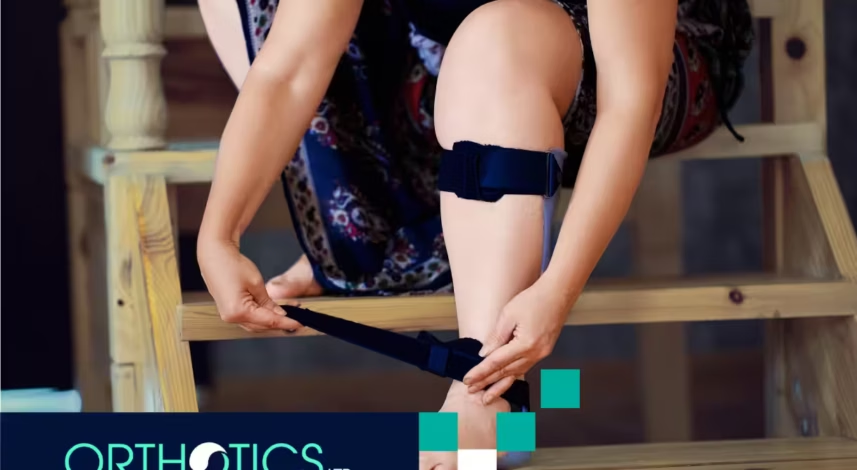
An ankle-foot orthosis, commonly called an AFO, is a brace worn on the lower leg and foot. It controls the position and movement of the ankle, compensates for muscle weakness, and corrects abnormal foot or ankle mechanics. AFOs are among the most prescribed orthotic devices in the United States, and for good reason. When properly fitted, they can transform how a person walks, stands, and engages with daily life.
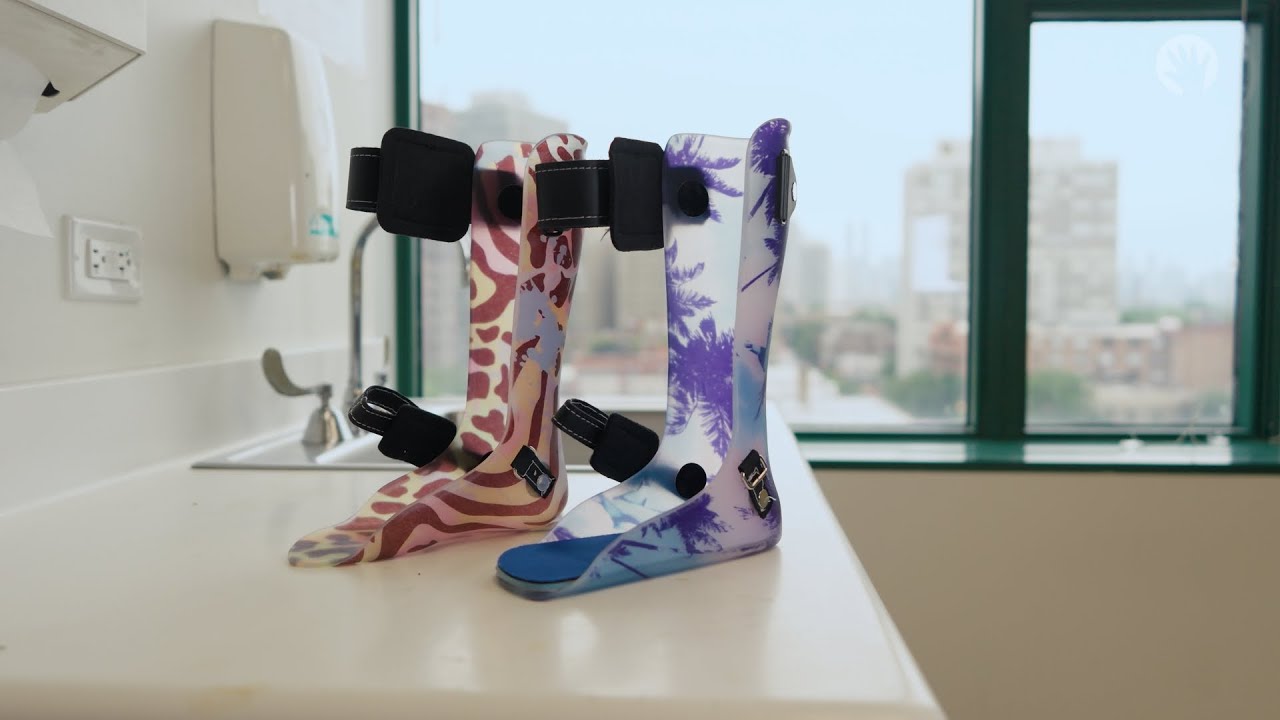
AFOs are usually made from lightweight thermoplastics, carbon fiber, or a combination of materials. They extend from just below the knee down into the shoe, cradling the calf, ankle, and foot. Some are rigid and immobilizing; others allow controlled motion. The right design depends entirely on the patient’s diagnosis, gait pattern, strength, and goals.
Who Needs an AFO?
AFOs are prescribed for a wide range of neurological, muscular, and orthopedic conditions. The most common include:
- Drop foot (foot drop): A condition where the patient cannot lift the front of the foot, causing toes to drag. Often caused by peroneal nerve injury, herniated discs, or neurological disease.
- Stroke recovery: Hemiparesis after a stroke frequently leaves one side of the body weak. An AFO restores stable foot clearance during walking.
- Multiple sclerosis (MS): Progressive weakness and fatigue can make walking exhausting; an AFO conserves energy and reduces fall risk.
- Cerebral palsy: In children, AFOs help manage spasticity, improve alignment, and support developmental milestones like standing and walking.
- Spinal cord injuries and post-polio syndrome: AFOs compensate for muscle weakness and prevent secondary deformities.
- Charcot-Marie-Tooth disease and peripheral neuropathy: Both cause distal weakness that responds well to bracing.
In our practice, we recently worked with a 58-year-old man who had a mild stroke and developed left-sided foot drop. He was tripping multiple times a day and had stopped walking his dog, an activity he loved. After fitting him with a carbon fiber posterior leaf spring AFO, he returned to walking his dog within two weeks and reported zero falls at his three-month follow-up. Stories like his are common, and they’re why we take the fitting process so seriously.
The Main Types of AFOs
While there are many specialized designs, three categories cover most prescriptions:
| AFO Type | Best For | Key Features |
|---|---|---|
| Solid AFO | Severe weakness, spasticity, or instability | Rigid; blocks ankle motion entirely; maximum stability |
| Articulated (Hinged) AFO | Patients with some active control who need ankle movement | Mechanical hinge allows controlled dorsiflexion; promotes natural gait |
| Posterior Leaf Spring (PLS) | Mild to moderate drop foot | Flexible posterior strut; lifts toes during swing phase; lightweight |
Other variations include ground reaction AFOs (used when knee instability accompanies ankle weakness), dynamic carbon fiber AFOs (energy-returning, popular with active adults), and tone-reducing AFOs for spasticity management in cerebral palsy.
What to Expect at Your AFO Fitting
A proper fitting is a multi-step process, and skipping steps leads to braces that hurt, rub, or simply don’t work.
- Clinical evaluation. Your orthotist examines your gait, range of motion, muscle tone, and skin integrity, and discusses your daily goals.
- Casting or 3D scanning. A custom AFO requires an exact mold of your leg. Modern practices often use 3D scanning for a faster, cleaner process.
- Fabrication. The brace is built, typically over one to three weeks, based on your prescription and measurements.
- Fitting appointment. You try the AFO on, and the orthotist checks alignment, pressure points, and movement.
- Break-in period and follow-up. Most patients wear the AFO in gradually increasing intervals. A follow-up visit two to four weeks later allows for adjustments.
A well-fitted AFO should feel snug but never painful. Red marks lasting more than 20 minutes after removal, blisters, or numbness all warrant a return visit.
Get the Right AFO for Your Needs
An AFO can be life-changing, but only when it’s the right type, properly fitted, and paired with patient education. Whether you’re recovering from a stroke, managing MS, or seeking support for a child with cerebral palsy, the device on your leg should match the life you want to live.
At Orthotics Ltd., our certified orthotists specialize in custom and prefabricated AFOs for patients of all ages. We serve communities across New York and the surrounding areas. From the first evaluation through every follow-up adjustment, we’re committed to helping you walk with confidence and comfort. Contact us today to schedule a consultation and take the first step toward better mobility.
Frequently Asked Questions
1. How long does an AFO last?
Adult AFOs typically last three to five years with regular use. Pediatric AFOs are usually replaced every 9–18 months as children grow.
2. Can I wear my regular shoes with an AFO?
Most patients need shoes that are one-half size larger than usual, with removable insoles and a wider toe box. Your orthotist can recommend specific styles.
3. Are AFOs covered by insurance?
Most insurance plans, including Medicare and Medicaid, cover medically necessary AFOs with a physician’s prescription. Coverage varies, so we recommend verifying benefits before fitting.
4. How long does it take to get used to an AFO?
Most patients adjust within two to four weeks. Gradual wear — starting with one to two hours per day — helps prevent skin irritation and builds tolerance.
5. Can I exercise or shower with my AFO?
You should remove your AFO for showering. Many patients exercise with their AFO; some active patients use a separate dynamic AFO designed for sports.
Sources:
- https://pmc.ncbi.nlm.nih.gov/articles/PMC8392067/
- https://www.physio-pedia.com/Introduction_to_Ankle_Foot_Orthoses
- https://www.hopkinsmedicine.org/health/conditions-and-diseases/common-orthopedic-disorders
- https://pmc.ncbi.nlm.nih.gov/articles/PMC12345332/
