

Charcot Foot: How CROW Boots and Custom Orthotics Prevent Amputation
Key Highlights
- Charcot foot is one of the most dangerous complications of long-standing diabetes because the bones in the foot can fracture and collapse without significant pain, leading patients to keep walking on a foot that’s actively breaking down.
- Roughly 15–30% of patients with long-standing diabetes develop peripheral neuropathy, and about 1% of those will develop Charcot arthropathy at some point, making early recognition critical for the millions at risk.
- The classic warning signs are unilateral swelling, redness, and warmth in the foot, often with little or no pain. If your foot looks noticeably different from the other one, that’s a reason for an urgent evaluation.
- Treatment unfolds in three phases: an acute phase managed with a total contact cast (TCC), a transition phase using a custom CROW boot (Charcot Restraint Orthotic Walker), and a long-term maintenance phase using custom diabetic shoes and orthotics.
- Properly executed, this treatment pathway can prevent the foot deformity, ulceration, and infection that lead to amputation, outcomes that remain a stark reality for patients who go undiagnosed or untreated.
- Charcot foot care is a long-term partnership between an experienced orthotist, the patient’s endocrinologist, and (often) a podiatric or wound care specialist, not a one-time fitting.
Why Charcot Foot Demands Urgent Attention
If you or someone you care for has diabetes, this is the foot complication that deserves your attention more than almost any other. Charcot foot, sometimes called Charcot arthropathy or diabetic Charcot, is dangerous precisely because it doesn’t always hurt. Patients with diabetic neuropathy have reduced sensation in their feet, which means the pain signals that would normally tell them to stop walking on a fractured bone simply don’t come through. They keep walking. The bones keep breaking. The foot slowly collapses into the deformity that, untreated, ends in ulceration, infection, and, in the worst cases, amputation.
The American Diabetes Association and the American Orthopaedic Foot & Ankle Society both emphasize the same point: outcomes in Charcot foot are determined largely by how quickly the condition is recognized and offloaded. A foot caught in the early acute phase and properly braced can heal into a stable, functional shape. A foot that goes unrecognized for weeks or months may deform permanently — or worse.
This guide walks through what Charcot foot is, who’s at risk, the warning signs every diabetic patient and caregiver should know, and the bracing pathway that prevents the worst outcomes.
What Charcot Foot Actually Is
Charcot foot is a progressive condition in which the bones of the foot weaken and fracture, often spontaneously and often without obvious trauma. The trigger is typically peripheral neuropathy, the nerve damage that develops in long-standing or poorly controlled diabetes. With neuropathy, the foot loses both protective sensation and the fine neurological control that maintains bone health and joint stability.
What happens next is something of a cascade. A minor stress, sometimes nothing more than the act of daily walking, causes a small fracture. Because the patient feels little or no pain, they continue weight-bearing. Inflammation builds, blood flow to the foot increases dramatically, and that increased blood flow actually accelerates bone resorption, weakening the surrounding bones further. More fractures occur. Ligaments stretch and tear. Joints dislocate.
If this process continues unchecked, the foot can collapse into the classic “rocker bottom” deformity, a foot whose arch has fallen inward and downward to the point that the midfoot bears weight instead of the heel and ball. That altered shape creates pressure points on skin that lacks normal sensation, and pressure on insensate skin is how diabetic foot ulcers begin. From there, infection and amputation become real risks.

Who’s at Risk
The population at risk is large, even if Charcot itself is relatively uncommon. The American Diabetes Association estimates that peripheral neuropathy affects somewhere between 15% and 30% of patients with long-standing diabetes, and roughly 1% of patients with neuropathy go on to develop Charcot arthropathy. The highest-risk profile includes:
- Patients with diabetes lasting more than 10 years
- Patients with confirmed peripheral neuropathy (loss of protective sensation)
- Patients with poorly controlled blood glucose
- Patients with a history of foot trauma, even mild
- Patients with previous foot ulcers
- Patients who have had a kidney or pancreas transplant
- Patients with peripheral vascular disease
It’s worth noting that Charcot foot can also occur in non-diabetic patients with other causes of neuropathy, alcoholism, certain chemotherapy regimens, syringomyelia, leprosy in some parts of the world, but diabetes accounts for the overwhelming majority of cases in the United States.
Warning Signs: What to Look For
Because pain is often muted or absent, the warning signs of Charcot foot are visual and tactile rather than painful. Any diabetic patient and any family member helping with diabetic foot care should know them:
- Swelling in one foot but not the other. Bilateral swelling has other causes. Unilateral swelling, especially without a clear injury, deserves urgent attention.
- Redness in the affected foot, often appearing warm or flushed compared to the other side.
- Warmth to the touch. The affected foot can feel several degrees warmer than the unaffected one — a classic early sign.
- A change in shape. If one foot looks different from the other — flatter, wider, more swollen at the midfoot — this is significant.
- Mild discomfort or a feeling of “heaviness.” Pain may be minimal, but many patients describe a vague sense that something is wrong.
- Difficulty fitting into a familiar shoe. A shoe that suddenly feels too tight on one foot can be an early clue.
Here’s the urgent point: these signs can look like a sprain, a mild cellulitis, or a gout flare to an untrained eye. The misdiagnosis rate for early Charcot foot is uncomfortably high, and every week of delay matters. If you or a loved one with diabetes notices these changes, push for evaluation by a clinician familiar with diabetic foot complications — and ask specifically whether Charcot is being considered.
The Three Phases of Charcot Foot
Treatment varies depending on which phase the foot is in.
Phase 1: Acute (Active Inflammation)
This is the active, inflammatory stage. The foot is hot, swollen, and red. Bones are actively fracturing and the structure of the foot is at maximum vulnerability. The patient must not bear weight on this foot.
Phase 2: Coalescence (Healing Begins)
Over weeks to months, the inflammation begins to subside. Swelling decreases, warmth diminishes, and the bones begin to consolidate as healing tissue forms. The foot is still fragile but is no longer actively breaking down. Some controlled, protected weight-bearing becomes possible.
Phase 3: Reconstruction (Long-Term Stability)
The bones have healed into their new shape — which may or may not resemble the original foot. The challenge now becomes managing whatever deformity remains and preventing ulceration on the altered foot for the rest of the patient’s life.
The Treatment Pathway
The bracing devices used at each phase are different, and using the right one at the right time is what separates a healed foot from a deformed one.
| Phase | Primary Device | Goal | Typical Duration |
|---|---|---|---|
| Acute | Total Contact Cast (TCC) | Complete offloading; immobilization | 8–12 weeks, sometimes longer |
| Transition | CROW boot (Charcot Restraint Orthotic Walker) | Continued offloading with limited ambulation | 3–12 months |
| Long-term | Custom diabetic shoes + custom orthotics | Prevent recurrence and ulceration | Lifetime |
Acute Phase: Total Contact Cast
The total contact cast is the gold standard for the acute phase. It’s a specially applied cast that conforms closely to the entire surface of the foot and lower leg, distributing pressure across the largest possible area and effectively eliminating focal pressure points. The patient typically remains non-weight-bearing or partially weight-bearing during this phase, and the cast is changed every 1–2 weeks to monitor the skin and adjust as swelling changes.
The TCC requires expert application—applied poorly, it can create the very pressure points it’s meant to prevent. This is why Charcot care is best managed by clinicians with specific experience in the condition.
Transition: CROW Boot
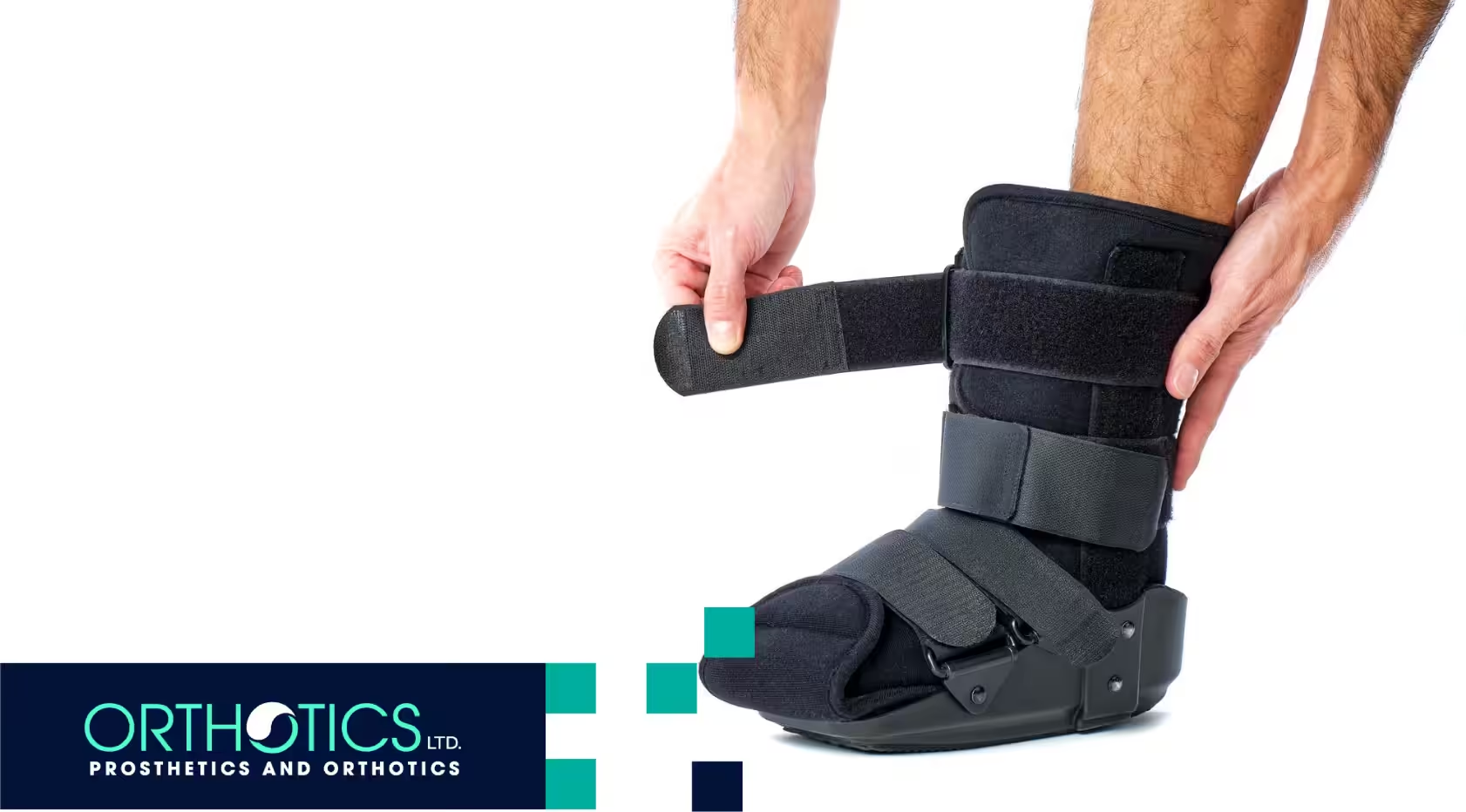
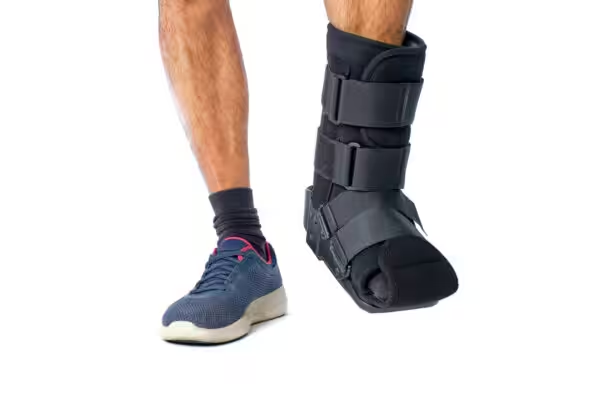
Once the acute inflammation has subsided and the foot is entering the coalescence phase, the patient is typically transitioned to a CROW boot, Charcot Restraint Orthotic Walker. The CROW is a custom-molded, full-length brace that encases the foot and lower leg in a rigid shell with a cushioned interior. It functions like a removable total contact cast, with one significant advantage: the patient can ambulate in it, and it can be removed for skin inspection and hygiene.
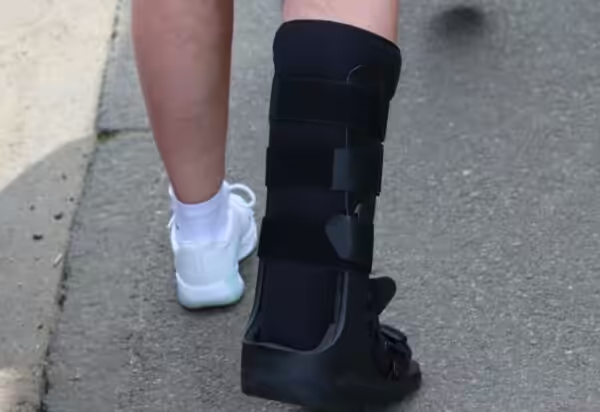
The CROW boot is what allows patients to begin returning to daily life, to walk to the bathroom, to do limited household tasks, to start the process of becoming mobile again, without sacrificing the protection the foot still needs. Because it’s custom-molded, the fit accommodates whatever shape the foot has assumed during healing, including significant deformity.
In our sessions, we’ve seen the difference a properly fitted CROW boot can make. One patient, a long-term diabetic in his early sixties, had been managed in a TCC for three months and was understandably exhausted with a non-weight-bearing life. His mobility had collapsed, his mood had suffered, and his family was struggling to manage his care. After fitting him with a custom CROW boot and walking him through a gradual weight-bearing protocol coordinated with his endocrinologist and physical therapist, he was back to walking around his home within two weeks and out to the mailbox within a month. His foot healed into a shape that, while not perfectly normal, was stable enough to support a long-term life in custom diabetic shoes. He has not ulcerated in the four years since.
Long-Term: Custom Diabetic Shoes and Orthotics
Once the foot has stabilized, the patient transitions out of the CROW boot into custom diabetic shoes paired with custom orthotics. The shoe accommodates whatever deformity remains. The orthotic redistributes pressure away from high-risk areas. Together, they prevent the pressure points that would otherwise lead to ulceration. This pairing is a lifetime tool for Charcot patients — there is no point at which they “graduate” from it, because the underlying neuropathy and altered foot shape don’t go away.
Our companion post on custom orthotics for diabetic foot care covers this long-term maintenance in greater depth.
Why This Is an Orthotist’s Job, Not Just a Podiatrist’s
Charcot foot care typically involves a team: an endocrinologist managing the underlying diabetes, a podiatrist or foot and ankle surgeon overseeing the medical and surgical aspects, a wound care specialist if ulceration is present, and an orthotist responsible for the custom devices that make offloading possible. Each role is essential, and they don’t substitute for one another.
The orthotist’s role is the fabrication and ongoing adjustment of the bracing devices. A CROW boot isn’t a stock item pulled off a shelf—it’s a custom-molded device that requires accurate casting or 3D scanning, careful fabrication, and regular fit adjustments as the foot’s shape continues to evolve. The same is true of the long-term custom shoes and orthotics. This work requires the specific training and equipment that orthotists bring.
Ongoing Care: A Lifetime Commitment
Even after the acute phase is well behind them, Charcot patients require lifelong vigilance. This typically includes:
- Daily skin checks: Patients or caregivers visually inspect both feet every day for redness, blisters, or breakdown.
- Routine orthotist follow-up: At minimum annually, often more frequently in the first years after a Charcot event.
- Coordinated diabetic care: Blood sugar control reduces the risk of neuropathy progression and additional Charcot episodes.
- Replacement of shoes and orthotics: Typically every 1–2 years for adults, sometimes more often depending on wear.
- Awareness of the other foot: Patients who develop Charcot on one side have a meaningfully elevated risk of developing it on the other.
Charcot foot is one of those conditions where the best outcomes come from a sustained partnership between patient, family, and care team, not a single visit, not a single device, but ongoing care that adapts as the patient ages and as their diabetes evolves.
If You’re a Diabetic Patient or Caregiver, Don’t Wait
The single most important message in this post is also the simplest: if a diabetic patient develops a swollen, warm, red foot, especially one that looks different from the other, that is a reason for urgent evaluation, not a wait-and-see situation. Charcot foot caught in its first weeks can heal into a stable, walkable foot. Charcot foot missed for months becomes the deformity, the ulcer, and sometimes the amputation that this entire treatment pathway exists to prevent.
At Orthotics Ltd., we specialize in Charcot foot bracing, total contact casting in the acute phase, custom CROW boot fabrication during transition, and long-term custom diabetic shoes and orthotics for ongoing protection. Our clinicians work alongside your endocrinologist, podiatrist, and wound care team to coordinate care across the months and years that Charcot management requires. If you or a loved one is diabetic and has noticed unexplained foot swelling, warmth, or a change in shape, contact our New York clinics urgently. We know how much the timeline matters in this condition. Contact us today to schedule an evaluation.
Frequently Asked Questions
1. Is Charcot foot reversible?
The active inflammation is reversible, and with proper offloading the bones can heal. But the structural changes that occur during the acute phase — fractures that have healed in altered positions, ligaments that have stretched, joints that have shifted — are usually permanent. The goal of treatment is to halt the process early enough that the foot heals into a functional shape, not necessarily the original one.
2. How long will I need to wear a CROW boot?
The transition period in a CROW boot typically lasts anywhere from 3 to 12 months, depending on how the foot heals and how severe the initial event was. Some patients move out of the CROW boot into custom diabetic shoes relatively quickly; others use the CROW longer-term. Your orthotist and physician will guide this transition based on imaging, swelling, and the warmth of the foot compared to the other side.
3. Can I still walk with Charcot foot?
In the acute phase, the answer is usually no — at least not without strict offloading. Continued weight-bearing on an actively fracturing foot accelerates the damage. Once the foot has transitioned into the coalescence phase and you’ve been fitted with a CROW boot, limited and gradually increasing ambulation becomes possible. Long-term, with proper custom shoes and orthotics, most patients return to normal daily walking.
4. Will insurance cover a CROW boot?
Medicare, Medicaid, and most private insurers cover medically necessary CROW boots and custom diabetic footwear when prescribed for documented Charcot foot or qualifying diabetic foot conditions. Coverage details, prior authorization requirements, and supplier networks vary by plan, and an experienced orthotic provider can typically help navigate the documentation and benefits process.
5. What happens if Charcot foot goes untreated?
The progression is well-documented and serious: continued bone destruction, foot deformity (often the classic rocker-bottom shape), ulceration over the new pressure points, infection that can spread to the underlying bone (osteomyelitis), and in advanced cases, partial or full amputation of the foot or lower leg. This is why both the American Diabetes Association and the American Orthopaedic Foot & Ankle Society emphasize early recognition and immediate offloading.
Sources:
- https://my.clevelandclinic.org/health/diseases/15836-charcot-foot
- https://pmc.ncbi.nlm.nih.gov/articles/PMC6682845/
- https://prc.aofas.org/AssetListing/Condition-Articles-648/Charcot-Arthropathy-PDF-20813
- https://diabetesjournals.org/care/article/34/9/2123/38608/The-Charcot-Foot-in-Diabetes
- https://pubmed.ncbi.nlm.nih.gov/9763168/
